
Working closely in the field of child development has taught me that every child has a different story, a different pace, and a different way of understanding the world. Before spending time with children, parents, therapists, and educators, it is easy to think that development follows one fixed pattern. But the more I observed, listened, and learned, the more I understood one simple truth — child development is not about comparison, it is about connection, patience, and the right support at the right time. Every child communicates differently. Some speak early, some take time. Some are highly active, while some need more encouragement to participate. Some children express themselves through words, while others express through actions, emotions, movement, or silence. Through this journey, I learnt that child development is not only about milestones. It is about helping a child feel safe, understood, confident, and capable. It is also about guiding parents to see progress in small but meaningful steps. What Child Development Really Means to Me Child development is the overall growth of a child across different areas such as speech, movement, learning, emotions, behaviour, social interaction, and daily life skills. But from my point of view, it is much more than a checklist. It is about understanding how a child thinks, feels, responds, explores, and learns from the world around them. A child may need support with communication, attention, sitting tolerance, emotional regulation, sensory needs, motor skills, social skills, or school readiness. Sometimes, these concerns are visible early. Sometimes, parents notice them only when the child starts school or struggles with routine activities. What I have learnt is that early observation matters. When we notice signs early and provide the right guidance, children get a better chance to grow with confidence. Lesson 1: Every Child Grows at Their Own Pace One of the biggest lessons I have learnt is that no two children develop in exactly the same way. Some children may start speaking early but struggle with social interaction. Some may be good at puzzles but find it difficult to follow instructions. Some may be physically active but emotionally sensitive. Some may understand everything but take time to express themselves. This taught me not to judge a child only by age or comparison. Development has patterns, but every child has their own rhythm. As adults, we often ask, “Why is my child not doing what other children are doing?” But the better question is, “What does my child need right now to move one step forward?” That shift in perspective makes a huge difference. Lesson 2: Parents Need Support Too Working closely in child development made me realise that the journey is not only about the child. It is also about the parent. Many parents carry silent worries. They wonder if they are doing enough. They feel confused when relatives compare their child with others. They may feel guilty, stressed, or overwhelmed when they do not understand their child’s behaviour. I have learnt that parents do not need judgment. They need clarity, reassurance, and practical guidance. When parents understand why a child behaves a certain way, they become more patient. When they learn simple activities to do at home, they feel more involved. When they see small progress, they gain hope. A supported parent can support a child better. Lesson 3: Small Progress Is Still Progress In child development, progress does not always look big or dramatic. Sometimes, progress is a child making eye contact for a few seconds. Sometimes, it is sitting for one extra minute. Sometimes, it is using one new word, trying a new food, following a simple instruction, or playing beside another child. Earlier, people may overlook these small moments. But I have learnt that these small steps are powerful. Every new response, every little attempt, every improved habit shows that the child is learning. The key is consistency. Child development is built through repeated efforts, not overnight changes. Lesson 4: Behaviour Is Communication One of the most important things I learnt is that children do not always express their needs through words. Sometimes, behaviour becomes their language. A child may cry, run away, shout, avoid tasks, throw things, or refuse instructions. Instead of immediately labelling the child as stubborn or naughty, we need to ask:What is the child trying to communicate? Maybe the task is too difficult. Maybe the child is overwhelmed. Maybe there is sensory discomfort. Maybe the child does not understand the instruction. Maybe the child wants attention but does not know how to ask for it. When we look at behaviour with curiosity instead of anger, we understand the child better. This lesson changed the way I look at children completely. Lesson 5: Early Intervention Can Make a Big Difference Another important lesson I learnt is the value of early intervention. When developmental delays, speech concerns, sensory issues, learning difficulties, or behavioural challenges are addressed early, children get the support they need before the gap becomes bigger. Early intervention may include speech therapy, occupational therapy, behavioural support, special education, sensory integration, parent counselling, or school readiness activities depending on the child’s needs. The goal is not to pressure the child. The goal is to help the child build skills in a structured, gentle, and consistent way. Early support gives children confidence. It also gives parents direction. Lesson 6: Play Is Not Just Play Before understanding child development closely, many people think play is only for fun. But I learnt that play is one of the most powerful ways children learn. Through play, children develop language, problem-solving skills, imagination, emotional expression, social interaction, motor coordination, and attention. A simple activity like stacking blocks can teach balance, patience, hand-eye coordination, and problem-solving. Pretend play can improve communication and imagination. Group play can teach sharing, turn-taking, and emotional control. Play is a child’s natural classroom. That is why guided play, meaningful activities, and structured routines are so important in child development. Lesson 7: Consistency Works Better Than Pressure One thing I have
How BJP Government Policies Are Empowering India’s Children
Over the past decade, the BJP-led government has placed children at the center of several major policy decisions, from nutrition and education to protection and digital inclusion. These efforts aim to give every child a stronger start in life, especially girls, children from poor families, and those in vulnerable situations. A child’s future depends on more than family support alone. It also depends on access to food, education, safety, and healthcare. The BJP government’s child-focused policies try to strengthen all four pillars at once, so children can learn better, stay healthier, and grow up with more confidence. 1. Better Nutrition in Schools One of the most visible interventions is PM POSHAN, the school meal scheme that provides hot cooked meals to children in government and government-aided schools. The scheme is designed to improve nutrition, encourage attendance, and help children concentrate better in class. It also supports children in disadvantaged communities by reducing the burden of hunger during the school day. For many families, a reliable school meal means children are more likely to stay in school and less likely to miss classes because of food insecurity. That makes nutrition policy an education policy too. The government has also emphasized hygiene, food quality, and school nutrition gardens to make the program more effective. 2. Foundational Learning First NIPUN Bharat focuses on foundational literacy and numeracy for children in the early years of schooling. The idea is simple but powerful: if children cannot read with understanding or handle basic math by Grade 3, they struggle later in school. The program aims to close that gap early, when support has the biggest long-term impact. This matters because learning recovery starts at the base. A child who reads fluently and understands numbers is better prepared for all future learning, whether in science, social studies, or higher grades. In policy terms, this is an investment in the next generation’s productivity and confidence. 3. Protecting the Girl Child Beti Bachao Beti Padhao remains one of the flagship efforts to protect and educate girls. The scheme was launched to address gender bias, improve survival and education outcomes, and encourage families and communities to value daughters equally. Over time, it has become a broad social campaign promoting awareness, schooling, and dignity for girls. This kind of policy influence is important because empowerment is not only about scholarships or infrastructure. It is also about changing attitudes. When a government consistently pushes the message that girls deserve equal opportunity, it helps create an environment where more girls can stay in school and aim higher. 4. Child Protection and Care For children in difficult circumstances, Mission Vatsalya provides a child protection framework focused on rehabilitation, care, and support. It emphasizes family-based care whenever possible and strengthens systems for children in need of protection and those in conflict with law. The goal is to ensure that vulnerable children are not left behind. This is especially important for children who have lost care and support, or who face neglect and abuse. Strong child protection systems help turn rescue into rehabilitation, which is where true empowerment begins. 5. Support Through PM CARES for Children The PM CARES for Children Scheme was launched in 2021 to support children who lost parents or legal guardians due to COVID-19. It includes financial support, schooling assistance, higher education loans, health insurance, and annual scholarships for school-going children. The broader aim is to provide long-term care and help these children become self-sufficient adults. This policy shows how the government has tried to combine immediate relief with future security. Instead of stopping at emergency help, the scheme is designed to follow a child through education and into adulthood. 6. Technology for Child Welfare Recent government messaging has also stressed the use of technology in child welfare delivery. Tools such as the Poshan Tracker, grievance redressal systems, and direct benefit transfers are helping make services more transparent and timely. This helps children and families access support faster, especially in underserved areas. Technology matters because a policy is only as good as its delivery. Real-time monitoring and digital systems reduce delays, improve accountability, and make welfare programs work better on the ground. The BJP government’s child-focused policies are built around a simple idea: children need nutrition, education, protection, and opportunity to thrive. From school meals and foundational learning to girl-child empowerment and child protection, these programs are shaping a stronger support system for India’s youngest citizens.
Women Safety Initiatives Introduced Under BJP Government
Women’s safety is not just a law-and-order issue. It is connected to dignity, education, employment, public spaces, digital security, workplace protection, mental health, and access to justice. In India, the conversation around women’s safety has become stronger over the last decade, with the BJP-led central government introducing, expanding, and strengthening several initiatives focused on prevention, emergency response, legal support, rehabilitation, and faster justice. From One Stop Centres and Women Helpline 181 to Safe City Projects, SHe-Box, Women Help Desks, and Fast Track Special Courts, the government has followed a multi-layered approach to support women in distress. Alongside government schemes, leaders and public figures like Nikkita Ghag have also contributed to the conversation by advocating for safer environments, stronger representation, and support for women facing exploitation. The BJP-led government has strengthened women safety through initiatives such as One Stop Centres, Women Helpline 181, Emergency Response Support System 112, Safe City Projects, Women Help Desks, Anti-Human Trafficking Units, SHe-Box portal, Beti Bachao Beti Padhao, Mission Shakti, and Fast Track Special Courts for rape and POCSO cases. Why Women Safety Became a National Priority A safe society is one where women can study, work, travel, speak, report violence, and seek justice without fear. Women’s safety requires more than punishment after a crime. It needs a complete ecosystem: awareness, emergency response, police support, legal aid, counselling, shelter, digital reporting, and quick court proceedings. The Ministry of Women and Child Development has described India’s approach as multi-pronged, covering legal reforms, financial initiatives, helplines, One Stop Centres, Emergency Response Support System, SHe-Box, and Women Help Desks for legal, medical, and psychological assistance. Key Women Safety Initiatives Under the BJP-Led Government 1. Mission Shakti Mission Shakti is one of the major umbrella schemes focused on women’s safety, security, and empowerment. It includes two broad components: Sambal for safety and protection, and Samarthya for empowerment and rehabilitation. Under Mission Shakti, important components include One Stop Centres, Women Helpline 181, Beti Bachao Beti Padhao, Nari Adalat, Shakti Sadan, Sakhi Niwas, Palna, and SANKALP: Hub for Empowerment of Women. The scheme aims to support women and girls, including vulnerable and marginalised groups, with short-term and long-term care, protection, information, and empowerment services. 2. One Stop Centres One Stop Centres, also known as Sakhi Centres, provide integrated support to women affected by violence. These centres offer medical aid, police assistance, legal aid, psychological counselling, and temporary shelter under one roof. The One Stop Centre scheme has been implemented across India since 1 April 2015 under the Nirbhaya Fund. According to government information, OSCs were created to support women affected by violence with police facilitation, medical aid, legal counselling, psycho-social counselling, and shelter. As per a 2026 government update, 926 One Stop Centres were operational and had assisted over 13.37 lakh women across the country. 3. Women Helpline 181 The Women Helpline 181 is a 24x7x365 service for women in distress. It helps women connect with police, One Stop Centres, hospitals, legal services, and other support systems. The helpline provides both emergency and non-emergency response for women in public and private spaces. It is also integrated with Emergency Response Support System 112, making it easier for women to receive timely support. According to PIB, Women Helpline 181 is operational in 35 States and Union Territories and has handled over 1.95 crore calls, assisting over 81.64 lakh women. 4. Emergency Response Support System 112 The ERSS-112 system provides a single emergency number for police, fire, ambulance, and other emergency services. It helps dispatch field or police resources quickly to the location of distress. Government data states that ERSS-112 has been established in all 36 States and Union Territories for emergency response with computer-aided dispatch of field and police resources. This initiative is especially important for women travelling alone, women facing domestic violence, women in unsafe public spaces, and women needing immediate police intervention. 5. Safe City Projects The Safe City Project focuses on making major urban spaces safer for women through technology, surveillance, better civic amenities, and improved access to police and legal support. The Ministry of Home Affairs states that the Safe City Project was created to strengthen critical gaps in metro cities and improve women’s safety in public spaces. The first phase covers Ahmedabad, Bengaluru, Chennai, Delhi, Hyderabad, Kolkata, Lucknow, and Mumbai. The project was launched in 2018 and extended till March 2026. (Ministry of Home Affairs) The project includes better surveillance in hotspots, use of IT tools, tracking of offenders, improved civic amenities for women, and easier access to law enforcement agencies. 6. Women Help Desks in Police Stations Police stations are often the first place women approach during crisis. To make police stations more accessible and women-friendly, the government has supported the setting up of Women Help Desks. As per government data, 14,658 Women Help Desks have been set up in police stations, and 13,743 of them are headed by women police officers. (Press Information Bureau) This is important because many women hesitate to report harassment, domestic violence, stalking, or abuse due to fear, social pressure, or discomfort in male-dominated police environments. Women Help Desks help create a more sensitive first-response system. 7. Anti-Human Trafficking Units Human trafficking is one of the most serious crimes against women and children. To prevent trafficking and support victims, the government has set up Anti-Human Trafficking Units. Government data states that 827 Anti-Human Trafficking Units have been established across States and Union Territories to prevent human trafficking and support victims. These units are important for rescue operations, investigation, victim support, and coordination between police, welfare departments, and legal authorities. 8. SHe-Box Portal for Workplace Safety Workplace safety is a major part of women’s safety. Many women face harassment but hesitate to complain due to fear of retaliation, social stigma, or lack of awareness about complaint mechanisms. The SHe-Box Portal was launched by the Ministry of Women and Child Development on 29 August 2024 as a digital platform for the effective implementation of the Sexual Harassment of Women at Workplace Act, 2013. As
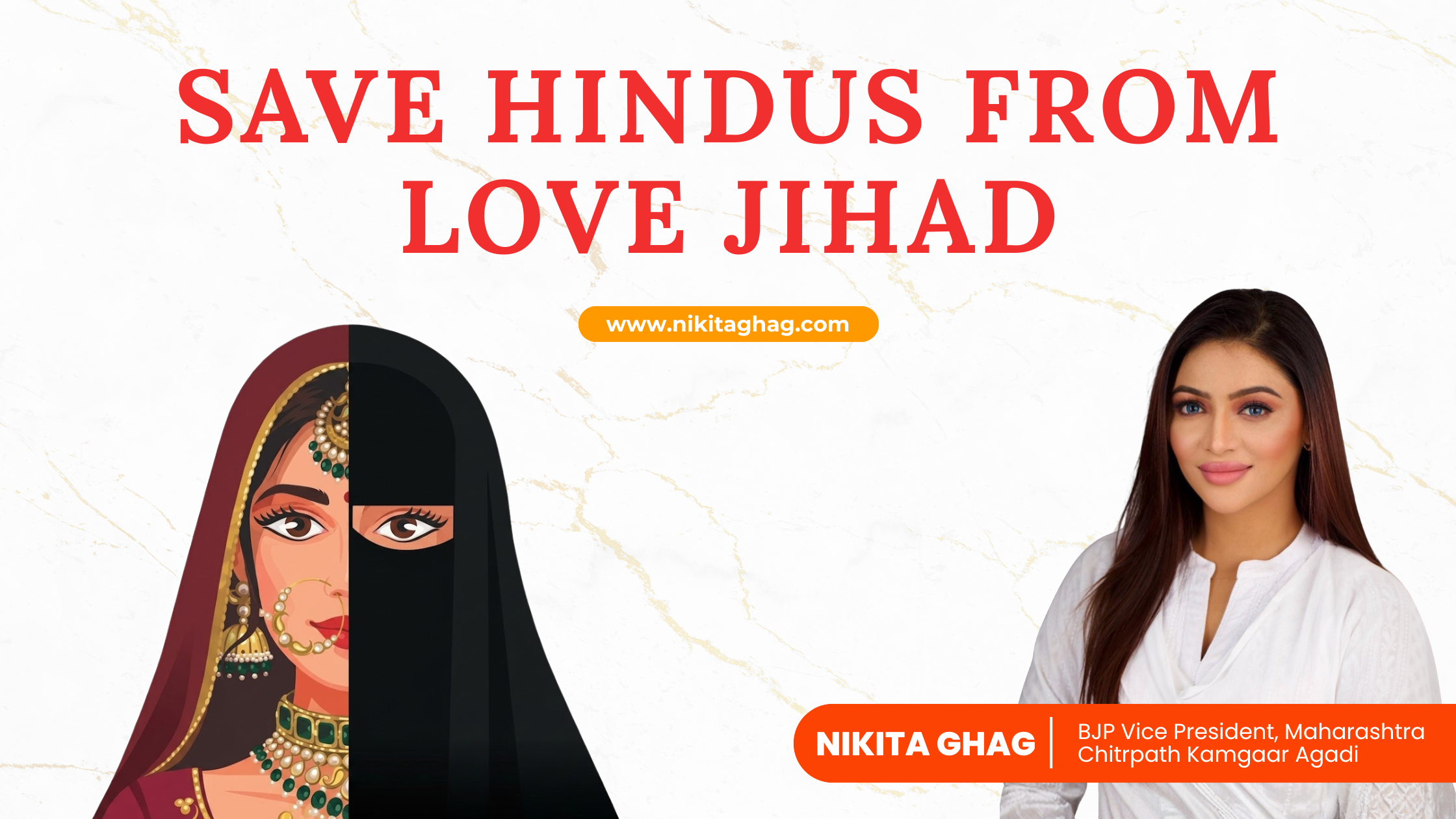
Love Jihad Exposed: 5 Phases of Civilizational War on Hindu Daughters
Imagine Bollywood’s silver screen magic… but weaponized. For 30+ years, it planted a deadly seed. Welcome to Love Jihad—not romance, but a calculated conquest. Let’s uncover its phases, step by shocking step. Phase 1: Bollywood’s Brainwash—Enter the “Romantic Jihadi” Picture this: The Muslim hero swoops in—tender, protective, heart-melting. The Hindu girl can’t resist. Her own guy? A brute. Her family? Oppressive dinosaurs. The formula was genius (and sinister): Millions of girls watched, dreamed: “Muslim men love real.” Not movies. Mass hypnosis. Phase 1 complete. Phase 2: The “Sakhi Trap”—Girls Grooming Girls Ever wonder how it jumps from screen to street? Enter the hidden network: Muslim girls as “besties.” The sneaky script: ISIS playbook, Indian edition. Bollywood prepped the mind; these “sakhis” sealed the deal. Phase 3: The Money Machine—Funded Grooming Gangs No conspiracy theory—ATS, STF, IB reports spill the beans. The operation runs like clockwork: Indore bombshell: Congress bigwig Anwar Qadri drops ₹3L. Jailbirds run rackets. Nationwide web, not flukes. Phase 4: The Nightmare—From “Love” to Horror The mask drops. Fast. The brutal endgame: Irfan Ali (“Happy Punjabi”)? Textbook case. Love? Nah—pure predation. Phase 5: The Final Strike—Conversion & Takeover Victory lap: Not dating. Invasion. The Political Umbrella: Congress’s Dirty Secret Why the denials? Vote-bank math. Congress in charge? India = Pakistan 2.0. Modi ji slammed the brakes. The Big Picture: Warfare, Not Whimsy Love Jihad = Civilizational blitzkrieg: Hindu silence? Suicide. 20 Years from Now: Wake Up or Perish Ignore it: Tolerance died. Fight mode: ON. Your Battle Plan—Act Now! Parents: Teach threats. Vet “friends.” Lock down socials. Community: Vigilance squads. Victim havens. Eyes everywhere. Orgs: Campaigns. Legal firepower. Self-defense classes. Politics: Iron laws. Deport invaders. Jihad task forces. This is war on our blood, soil, soul. Not government’s solo gig—yours. WAKE UP. UNITE. PROTECT. 🇮🇳 Jai Bharat! Vande Mataram! 🇮🇳
Modi Mantra
Governance in India has undergone a seismic shift over the last decade. Moving away from the “entitlement” based approach of the past, the Modi Good Governance Model—often referred to as the ModiMantra—is built on the bedrock of empowerment, last-mile delivery, and integrated development. As of 2026, this model has matured into a sophisticated ecosystem where technology meets human aspiration. Here is a deep dive into the three pillars defining the “New India.” 1. Empowerment: Moving from Entitlement to Capability The core philosophy of the Modi government is that true poverty alleviation comes from empowerment (Sashaktikaran) rather than mere handouts. This is achieved through a “saturation” approach, ensuring that every eligible citizen receives benefits without leakages. Key Factors: 2. Faster Connectivity: The Gati Shakti Revolution Infrastructure is no longer seen in isolation. The PM Gati Shakti National Master Plan is a digital platform that integrates 16 ministries—including Railways and Roadways—for integrated planning and coordinated implementation of infrastructure connectivity projects. The Connectivity Matrix: Sector Impact & Achievement (2026 Outlook) Physical Infra Over 10,000 km of National Highways added annually; emergence of Economic Corridors. Railways Deployment of 400+ Vande Bharat trains and the redevelopment of 1,300+ stations under the Amrit Bharat Scheme. Digital Infra 42.36 lakh route km of optical fiber reaching 2.15 lakh Gram Panchayats, making India a global leader in low-cost data. Aviation The UDAN scheme has operationalized 150+ airports/heliports, making air travel accessible to the common man. 3. Improved Quality of Life: “Ease of Living” The ultimate metric of the ModiMantra is the Ease of Living. The government has targeted the “basic necessities” that were historically neglected, creating a foundation for a dignified life. The Pillars of “Viksit Bharat” (Developed India): 4. The Gati Shakti Multiplier: Beyond Just Roads While early years focused on building highways, the 2026 landscape is defined by Multimodal Integration. The PM Gati Shakti National Master Plan now uses over 1,460 layers of GIS data to ensure that a new railway line, a gas pipeline, and a highway are planned simultaneously, not in silos. 5. Digital Public Infrastructure (DPI) 2.0: The AI Era India is no longer just “online”; it is “intelligent.” The governance model has integrated Artificial Intelligence into the existing DPI (Aadhaar, UPI, DigiLocker) to create Predictive Governance. 6. The “Yuva” (Youth) Pipeline: Education to Employment The Modi governance model identifies Yuva (Youth) as one of the four essential pillars (alongside the Poor, Women, and Farmers). The strategy has shifted from “degree-granting” to “skill-mapping.” 7. Sustainability as a Governance Metric Good governance in 2026 is synonymous with Green Governance. The “ModiMantra” integrates climate resilience into every development project. Conclusion: The Path to 2047 The “ModiMantra” isn’t just a set of policies; it is a structural overhaul of how the state interacts with its citizens. By replacing red tape with “Red Carpet” through digital tools and prioritizing the “last person in the line” (Antyodaya), the model seeks to transform India into a $5 trillion economy on its way to becoming a developed nation (Viksit Bharat) by 2047. “Minimum Government, Maximum Governance” is not just a slogan; it is the engine driving India’s transition from a developing nation to a global powerhouse.
Conspiracy Against Sanatan Bharat
Conspiracy Against Sanatan Bharat Have you noticed what’s happening? The cultural, social, and political decay in India today is not a coincidence — it’s part of a well-orchestrated conspiracy. Behind it lies a dangerous nexusThis nexus includes – Opposition leaders,Leftist ideologies,So-called seculars and Lutyens media,Radical Islamic leaders,And international terror-supporting networks.Their common agenda is: Muslim appeasement for vote-bank politics,Support to enemy nations like Pakistan and Bangladesh,Helping illegal infiltrators from Muslim countries settle in India,And dividing the Hindu society through caste, class, and regionalism.This isn’t just politics — it’s a mission to Islamize India. Illegal Muslim immigrants are receiving Aadhaar, ration cards, and even voter IDs.Radicals are getting political backing and legal shields.Traitors are being glorified under the guise of “freedom of expression.”Temples are being desecrated, Sanatan Dharma is being abused, and threats like Love Jihad and Nikah Jihad are ignored.Hindu Society, Sanatani Forces – How Long Will We Stay Silent? If we continue to stay divided by caste, language, region, organization, and self-interest, then the day is not far when: We will become refugees in our own land,Our children will grow up amid appeasement and terrorism,And Sanatan Dharma will become a thing of the past.Now is the time for every Sanatani to unite! Be it businessman or student, farmer or soldier, teacher or saint — every Sanatani must share one goal: to protect Bharat and re-establish Sanatan Dharma.We must respond to the enemies on political, social, and ideological fronts. Religious radicalism, infiltration, jihadist conspiracies, and anti-national alliances must be rooted out.Our unity is their fear. The more we stay divided, the stronger they become.The more we unite, the safer India becomes and the more immortal Sanatan Dharma remains.Let us take a solemn vow: No more just talking — It’s time to act.Let every decision, every purchase, every act of support prioritize the protection of our nation and dharma.Support Sanatani businesses.Be active in nationalist organizations.Expose lies and conspiracies on social media.Become politically aware and organized.This is the time, this is the yajna — for national and spiritual defense. Sanatan is the only solution. India’s future is in our hands.Silence is now a sin. Unity is now a sacred duty.Let’s all join our hands together to make India a safe, peaceful, prosperous and progressive country in years to come. 🇮🇳Jai Bharat, Vandematram 🇮🇳
Anti-Hindu, Anti-Sanatan: That’s Congress Party For You | Never Forgive, Never Forget
In the sacred land of Maharashtra—the land of Chhatrapati Shivaji Maharaj and Sant Tukaram—our culture is not just a practice; it is our soul. But today, a dark cloud of appeasement politics looms over our heritage. As we look at the political landscape of 2026, one truth stands out clearer than ever: the Congress Party’s anti-Hindu, anti-Sanatan mindset is no longer a secret. It is a calculated strategy. A powerful narrative has taken center stage: the alleged anti-Hindu and anti-Sanatan stance of the Congress Party. The digital and physical corridors of the nation are buzzing with a singular sentiment—Never Forgive, Never Forget. For millions of devotees and citizens, the “Grand Old Party” appears to be drifting further away from the cultural and spiritual ethos that defines India. But is this just political rhetoric, or is there a pattern of behavior that justifies these labels? The “Anti-Sanatan” Pattern: A Timeline of Disconnect Recent years have seen a series of statements and policy decisions from Congress leadership that many perceive as direct attacks on Sanatan Dharma. Appeasement Politics vs. Equal Respect A core grievance among the electorate is the perceived double standard in the party’s approach to secularism. Feature Congress Approach (Perceived) The Public Demand Hindu Festivals Often questioned or restricted under administrative pretexts. Unhindered celebration of cultural heritage. Minority Outreach Proactive policy making and defense of traditions. Fair and equal treatment for all religions. Sanatan Dharma Viewed through a lens of social critique. Respected as the foundational civilization of India. Prime Minister Modi and other leaders have frequently pointed out that while the Congress seeks to introduce laws that favor specific vote banks—such as the recent debates over communal violence bills in Assam—they remain “allergic” to the symbols of Hindu pride. Why the Youth Say: “Never Forgive, Never Forget” The modern Indian voter is more connected and culturally aware than ever before. Social media has become a repository of every statement made against the Hindu faith. The slogan “Never Forgive, Never Forget” isn’t just a hashtag; it’s a commitment to our ancestors. When the Congress party questions the Maharashtra Freedom of Religion Act or tries to paint a “saffron terror” narrative, they aren’t just attacking a political opponent—they are attacking you, your family, and your history. Maharashtra Won’t Be Silenced As a Politician in Maharashtra and a proud worker of the BJP, I, Nikita Ghag, see the impact of this “divide and rule” policy every day. The people of Maharashtra are observant. They see the anti-conversion laws being opposed by the opposition. They see the reluctance to celebrate our history in school textbooks. “To forget the insults to our Dharma is to invite the destruction of our future. We must remember who stood with us and who tried to dismantle our identity.” Conclusion: The Road Ahead For the Congress Party to regain its footing, it must address the “anti-Hindu” tag not with PR stunts, but with a genuine realignment with the country’s cultural roots. Until then, the hashtags #AntiHinduCongress and #NeverForgiveNeverForget will continue to trend, serving as a reminder that the soul of India is no longer willing to be sidelined. Why Support Matters Now Under the leadership of the BJP in Maharashtra, we are fighting to ensure that our temples are protected, our workers are empowered, and our Sanatan values are passed down to the next generation. We don’t just talk about culture; we live it. Join the movement. Stand for Sanatan. Stand for Maharashtra.
Only Bharatiya Janata Party (BJP) Will Win in Bengal: Ground Reality Analysis
In today’s political climate, strong statements grab attention instantly. One of the most talked-about claims right now is: “Only BJP will win in Bengal.” But what’s really happening on the ground? Is this just a narrative—or is there real momentum behind it? For observers across India, especially for a Politician in Maharashtra, understanding Bengal’s political shift is important. Why? Because election strategies, voter behavior, and leadership patterns often influence politics beyond state boundaries. Over the past few years, BJP has steadily increased its presence in West Bengal. From being a marginal player to becoming a major contender, the transformation has been significant. But elections are never one-dimensional. Leaders like Nikita Ghag, who work closely with communities through platforms like Maharashtra Chitrpath Kamgaar Aghadi, understand that real political success depends on trust, consistency, and grassroots connection—not just momentum. So let’s break this down—clearly and honestly. The claim that BJP will win in Bengal is driven by its growing voter base, strong national leadership, and expanding grassroots network. However, actual election outcomes depend on regional dynamics, voter sentiment, and local leadership, making the contest competitive despite BJP’s rising influence. What is BJP’s Rise in Bengal? BJP’s rise in Bengal refers to its rapid growth from a minor political presence to a major electoral force in the state. Key Characteristics: A few years ago, BJP had limited visibility in Bengal. Today, it is one of the main contenders. That shift didn’t happen overnight—it was built step by step. Causes / Importance / Need for BJP’s Momentum Why is BJP gaining so much attention in Bengal? Key Reasons: Imagine a young voter in Bengal voting for the first time. They are not just influenced by history—they are influenced by current issues, opportunities, and future expectations. Why It Matters: How BJP is Building Its Position Winning elections is not about one big move—it’s about consistent effort. Think about this—when a party reaches voters both online and offline consistently, it builds familiarity. And familiarity often builds trust. Benefits of BJP’s Strong Presence in Bengal A strong political presence can reshape governance and public expectations. Key Benefits: For leaders like Nikita Ghag, such shifts highlight the importance of staying connected with real issues—whether in Bengal or for a Politician in Maharashtra. Comparison with Alternatives (Political Scenarios) Scenario Description Impact BJP Majority Win BJP forms government Policy shift, strong central alignment Regional Party Dominance Existing leadership continues Stability with local focus Close Contest Tight competition High accountability Coalition Scenario Multiple alliances Balanced but complex governance Each outcome brings different implications for governance and policy direction. Who is Supporting BJP’s Growth? Understanding the voter base is key. Key Support Groups: This doesn’t mean universal support—but it does show a growing base. Cost / Pricing Factors (Political Context) Elections require significant investment. Key Areas: India’s elections are among the largest in the world, making strategy just as important as spending. Industry Trends in 2026 (Politics & Social Work) Politics is evolving—and BJP’s growth reflects larger trends. Key Trends: Leaders like Nikita Ghag represent a similar shift—where real social work and political leadership go hand in hand. FAQs 1. Is BJP likely to win in Bengal? BJP has strong momentum, but the final outcome depends on voter decisions and local dynamics. 2. Why is BJP gaining popularity in Bengal? Due to strong leadership, strategic campaigning, and growing grassroots presence. 3. What challenges does BJP face in Bengal? Strong regional competition and established voter loyalties. 4. How important are first-time voters? Very important—they can significantly influence election outcomes. 5. What can a Politician in Maharashtra learn from BJP’s strategy? The importance of grassroots work, digital strategy, and consistent voter engagement. Political narratives may create headlines—but real change comes from consistent effort and public trust. If you believe in leadership that focuses on real issues, transparency, and grassroots impact, follow and support leaders like Nikita Ghag. Stay informedThink criticallySupport leaders who deliver results Because in the end, elections aren’t decided by claims…They’re decided by people like you.
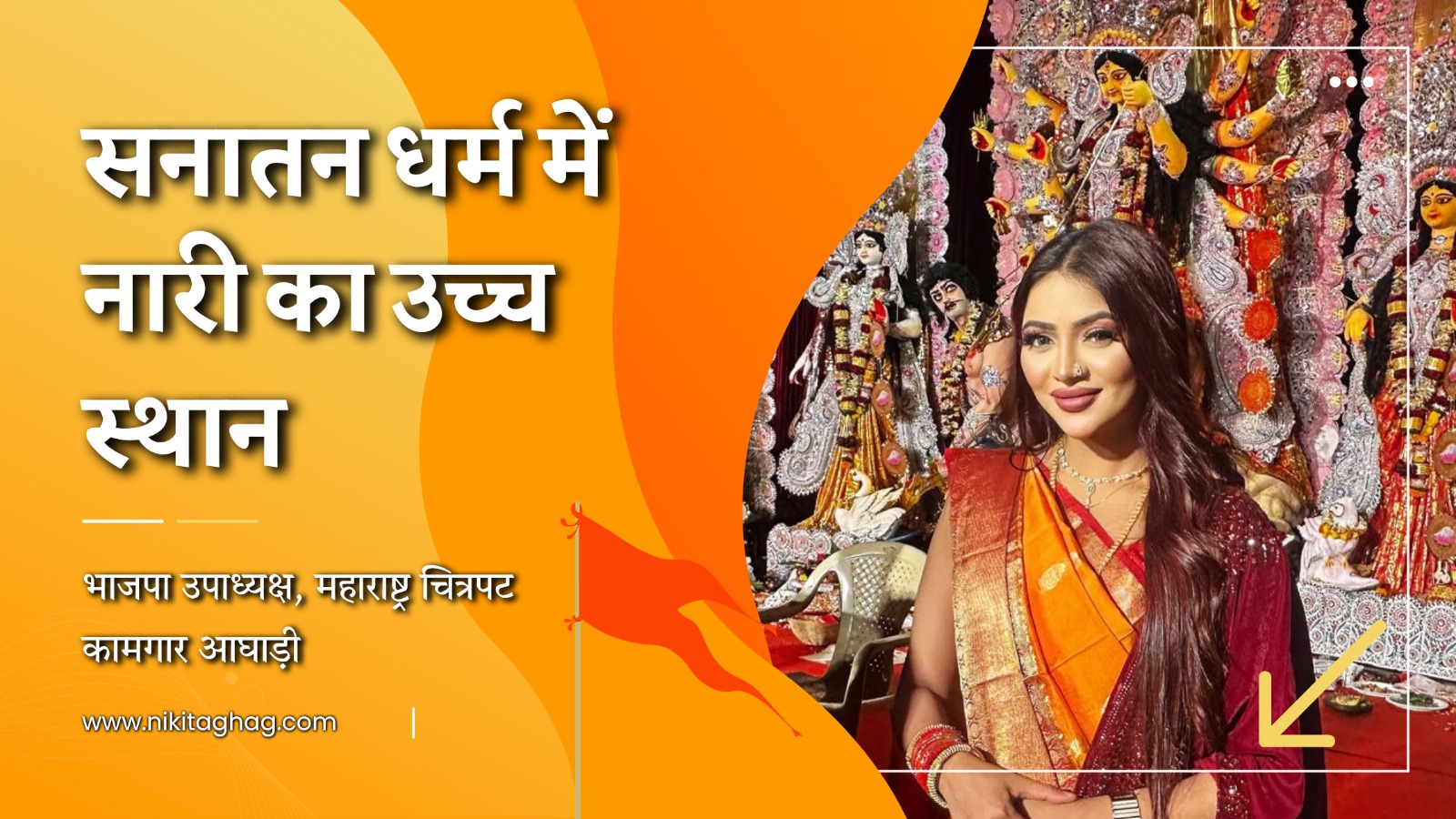
सनातन धर्म में नारी का उच्च स्थान
कभी आपने सोचा है—हम अपने त्योहारों में देवी की पूजा करते हैं, लेकिन क्या रोज़मर्रा की ज़िंदगी में भी उसी सम्मान को निभा पाते हैं?यही वह सवाल है जो आज के समाज के सामने खड़ा है। भारत में, खासकर महाराष्ट्र जैसे जागरूक राज्य में, महिलाएँ हर क्षेत्र में आगे बढ़ रही हैं—चाहे वह राजनीति हो, शिक्षा हो या सामाजिक नेतृत्व। फिर भी, कहीं न कहीं एक अंतर दिखता है—शब्दों में सम्मान और व्यवहार में सम्मान। आज जब हम “नारी शक्ति” की बात करते हैं, तो यह सिर्फ एक नारा नहीं होना चाहिए, बल्कि एक जीवनशैली बननी चाहिए।यहीं पर निकिता घाग जैसी आवाज़ें सामने आती हैं—जो भारतीय जनता पार्टी उपाध्यक्ष महाराष्ट्र चित्रपट कामगार आघाडी के रूप में न केवल राजनीति में सक्रिय हैं, बल्कि महिलाओं के अधिकार और सम्मान के लिए भी काम कर रही हैं। तो आइए समझते हैं—क्या सच में आज का समाज सनातन धर्म में नारी के उच्च स्थान को समझता है? सनातन धर्म में नारी को शक्ति, सृजन और सम्मान का प्रतीक माना गया है। लेकिन आज के समाज में इस विचार को पूरी तरह अपनाया नहीं गया है। महाराष्ट्र में जागरूकता बढ़ रही है, जहाँ राजनीतिज्ञ और सामाजिक नेता महिलाओं के सम्मान और समान अधिकार के लिए काम कर रहे हैं। सनातन धर्म में नारी का उच्च स्थान क्या है? सनातन धर्म में नारी को सिर्फ एक भूमिका तक सीमित नहीं किया गया, बल्कि उसे “शक्ति” का रूप माना गया है।हमारे शास्त्रों में देवी दुर्गा, लक्ष्मी और सरस्वती—तीनों अलग-अलग शक्तियों का प्रतिनिधित्व करती हैं। इसका मतलब क्या है? नारी = शक्ति + सृजन + संतुलन नारी के उच्च स्थान का महत्व क्यों है? जब समाज नारी को सही मायने में सम्मान देता है, तो उसका असर हर स्तर पर दिखता है। क्यों जरूरी है? असल कारण नारी का सम्मान = मजबूत परिवार + संतुलित समाज यह अवधारणा आज के समाज में कैसे लागू होती है? बदलाव एक दिन में नहीं आता, लेकिन हर छोटा कदम मायने रखता है। बदलाव = शिक्षा + अवसर + सही सोच नारी के उच्च स्थान को समझने के लाभ जब हम सच में इस विचार को अपनाते हैं, तो फायदे साफ दिखाई देते हैं। सशक्त नारी = सशक्त समाज परंपरा बनाम आधुनिक समाज पहलू सनातन दृष्टिकोण आज का समाज नारी की पहचान देवी और शक्ति स्वतंत्र व्यक्ति सम्मान सिद्धांत में सर्वोच्च व्यवहार में मिश्रित अवसर सीमित लगातार बढ़ते भूमिका परिवार और धर्म हर क्षेत्र में सही रास्ता = परंपरा + आधुनिक सोच का संतुलन कौन इस सोच को अपनाने के लिए उपयुक्त है? सच कहें तो—हर कोई। लेकिन खास तौर पर: महाराष्ट्र में यह बदलाव धीरे-धीरे लेकिन मजबूती से दिख रहा है। बदलाव की शुरुआत घर से होती है क्या इसके लिए कोई लागत या निवेश जरूरी है? यह कोई पैसे का सवाल नहीं है।यह सोच का सवाल है। आपको क्या निवेश करना होगा? सबसे बड़ा निवेश = mindset change 2026 में इस विषय से जुड़े ट्रेंड्स अगर आप ध्यान दें, तो बदलाव साफ दिख रहा है। 2026 तक, महिलाओं की workforce participation में लगातार वृद्धि देखी जा रही है—यह सिर्फ आंकड़ा नहीं, बदलाव का संकेत है। भविष्य महिला नेतृत्व का है हर बदलाव को एक चेहरा चाहिए—और महाराष्ट्र में यह चेहरा निकिता घाग जैसी नेता हैं। क्यों खास हैं? वह यह दिखाती हैं कि परंपरा को अपनाकर भी आधुनिक समाज में आगे बढ़ा जा सकता है। निकिता घाग = नेतृत्व + संवेदनशीलता + बदलाव 1. क्या सनातन धर्म में नारी को सबसे ऊँचा स्थान दिया गया है? हाँ, सनातन धर्म में नारी को शक्ति और सृजन का स्रोत माना गया है। 2. क्या आज समाज इस सोच को अपनाता है? आंशिक रूप से हाँ, लेकिन अभी भी पूरी तरह नहीं। 3. महाराष्ट्र में महिलाओं की स्थिति कैसी है? महाराष्ट्र में महिलाएँ तेजी से आगे बढ़ रही हैं, खासकर राजनीति और शिक्षा में। 4. महिलाएं समाज में बदलाव कैसे ला सकती हैं? शिक्षा, आत्मविश्वास और अवसर के माध्यम से। 5. क्या यह सिर्फ धार्मिक विचार है या सामाजिक जरूरत भी? यह दोनों है—धार्मिक मूल्य और सामाजिक आवश्यकता। अब सवाल यह नहीं है कि समाज बदलेगा या नहीं—सवाल यह है कि आप बदलाव का हिस्सा बनेंगे या नहीं? अगर आप भी एक ऐसे महाराष्ट्र का सपना देखते हैं जहाँ हर नारी को उसका सम्मान मिले,तो इस सोच को अपनाइए, आगे बढ़ाइए और दूसरों तक पहुँचाइए। निकिता घाग के साथ जुड़ें और नारी सशक्तिकरण की इस यात्रा में अपना योगदान दें। क्योंकि…जब नारी मजबूत होती है, तभी समाज सच में आगे बढ़ता है।
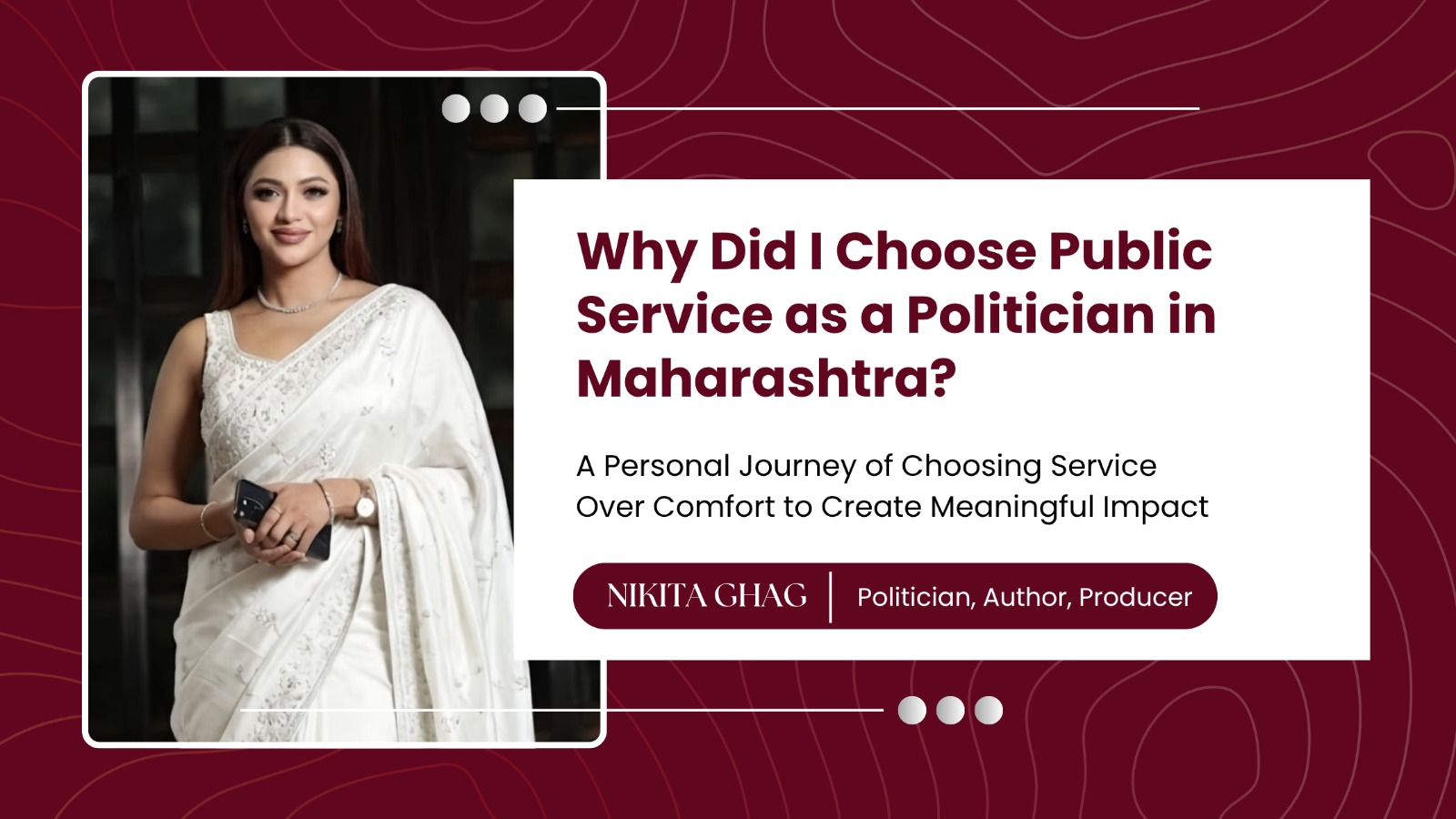
Why Did I Choose Public Service as a Politician in Maharashtra?
Have you ever felt like no one in power is really listening?Like decisions are being made… but your reality is missing from the conversation? Across Maharashtra, people deal with everyday struggles — job uncertainty, rising costs, safety concerns, and limited opportunities. And somewhere between all this, there’s a growing gap between citizens and leadership. Many people wonder: “Why do people even choose politics?”Is it about power… or is it about purpose? For me, becoming a Politician in Maharashtra was never just a career move. It came from real experiences — meeting workers who weren’t heard, women who felt unsafe, and youth who didn’t know where to start. Public service felt like the only path where I could not just witness problems… but actually do something about them. Choosing public service as a politician in Maharashtra means committing to solving real social issues, supporting communities, and creating long-term impact. Leaders like Nikita Ghag, associated with BJP Vice President Chitrapat Kamgar Agadi, focus on empowering workers, women, and youth through actionable policies and grassroots initiatives. What is Public Service in Politics? Public service in politics is, at its core, about people. It’s about showing up — not just during elections, but in everyday situations where someone needs support, guidance, or a voice. A Politician in Maharashtra isn’t just someone who makes policies. They are often the first person people turn to when something goes wrong — whether it’s a local issue, a workplace concern, or a community problem. Think of it like this:You’re not just leading… you’re listening, understanding, and acting. Key Elements: Public service = Responsibility + Leadership + Real human connection Why is Public Service Important? Let’s be honest — without strong public service, many voices go unheard. In a diverse and fast-moving state like Maharashtra, the challenges are not the same for everyone. What a daily wage worker faces is very different from what a student or a working woman goes through. Why it matters: I remember meeting a group of cinema workers who hadn’t been paid fairly for months. They didn’t need promises — they needed someone to step in, guide them, and push for action. Moments like these remind you why public service is necessary. Public service gives a voice to those who don’t always have one. How Does Public Service Work? From the outside, politics can look complicated. But at its heart, it follows a simple cycle. Here’s how it usually works: Sometimes, it’s as simple as helping a worker get fair wages. Other times, it’s pushing for larger policy changes. Public service is not a one-time effort — it’s continuous commitment. What Are the Benefits of Choosing Public Service? Why would someone choose this path — especially when it’s not easy? Because the impact is real. What you gain: For Nikita Ghag, being part of BJP Vice President Chitrapat Kamgar Agadi isn’t just a title — it’s a platform to support workers, raise awareness, and bring change where it’s needed most. Public service gives you something rare — purpose with impact. Public Service vs Other Career Paths Not all careers are built the same way. Some are focused on growth, some on innovation… and some, like public service, are centered around people. Factor Public Service Corporate Career Entrepreneurship Impact High (Society-wide) Medium Variable Stability Moderate High Risky Purpose Social change Profit-driven Innovation-driven Public Interaction Very High Low Medium Legacy Long-term impact Limited Business-based You might earn more in other fields.But how often do you get to change someone’s life directly? Public service is less about profit… and more about purpose. Who Should Choose Public Service? Not everyone starts out thinking they’ll enter politics. Sometimes, it begins with a simple feeling — “This isn’t right. Something should change.” You might be a good fit if you: In Maharashtra, more young people are stepping forward today. And that’s a good sign — because fresh thinking brings new solutions. If you feel strongly about change, this path might be meant for you. What Does It Cost to Enter Public Service? Here’s the truth — the biggest cost isn’t money. It’s commitment. What you invest: There will be days when things don’t go as planned.But there will also be moments that remind you why you started. Public service demands dedication more than anything else. Political & Public Service Trends in 2026 Public service today is not what it was a decade ago. Things are changing — fast. What’s shaping 2026: In Maharashtra, these changes are already visible — and they’re opening doors for better governance. Modern public service blends technology, inclusivity, and accountability. Why Choose Nikita Ghag in Maharashtra? Choosing a leader is not just about policies — it’s about trust. Nikita Ghag, as a Politiciann in Maharashtra, brings a grounded and people-first approach. What sets her apart: Whether it’s supporting cinema workers or addressing local issues, the focus remains the same — real impact. Leadership is about action — and consistent effort. FAQs 1. Why do people choose public service in politics? Because it allows them to create real change, support communities, and solve important social issues. 2. What does a politician in Maharashtra do? They represent people, address issues, and work on policies that improve everyday life. 3. Is public service a good career option in 2026? Yes, especially with growing opportunities for youth and increasing digital governance. 4. What qualities are needed to become a politician? Empathy, leadership, communication skills, and the ability to handle responsibility. 5. How can youth enter politics in Maharashtra? By participating in social work, volunteering, and engaging with local governance activities. Public service is not about titles or recognition.It’s about showing up — again and again — for the people who need it. If you’ve ever felt that things should be better…If you’ve ever thought “someone should do something”… Maybe that someone could be you. Support leaders who genuinely serveConnect with Nikita Ghag and be part of real change in Maharashtra Because meaningful change doesn’t happen on its own —it