
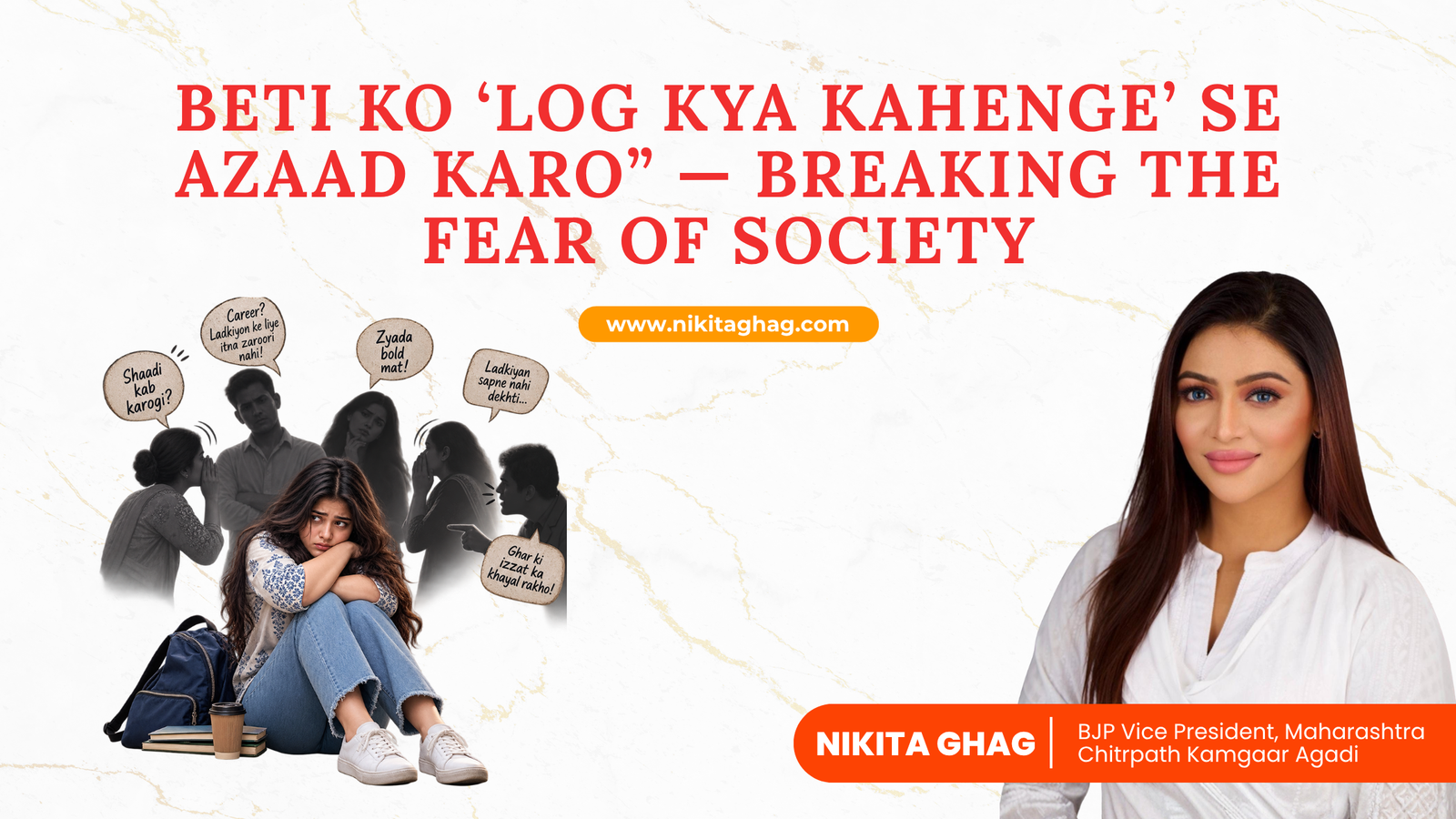
Beti Ko ‘Log Kya Kahenge’ Se Azaad Karo – Breaking the Fear of Society Har beti ke sapne aksar ek hi sawaal mein atak jaate hain: “Log kya kahenge?” Yeh phrase sirf ek dialogue nahi, ek mental lock hai jo ladkiyon ki choices, career aur life ko control karta hai. “Log Kya Kahenge?” Ka Asli Matlab Result? Beti khud ko chhota kar leti hai – dreams chhote, choices limited, darr hamesha background mein. Financial Independence: Asli Azaadi Ki Chaabi Jab beti financially independent hoti hai, tab “log kya kahenge” ka darr apne aap kam ho jata hai. Nikita Ghag apne blog Financial Independence for Women: A Key Step Towards Freedom from Abuse mein batati hain ki paise ki samajh aur financial security hi women ko abuse se nikalne ka real option deti hai. Simple steps: Jab beti ke paas apna paisa hota hai, tab woh “kya kahenge” se zyada “kya chahiye” par focus karti hai. Nikita Ghag: Ek Real-Life Role Model Nikita Ghag young women ko apni life khud design karne ke liye inspire karti hain. Message clear hai:Apni life ka decision logon ke muh se nahi, apne dimaag aur dil se lo. Beti Ko Azaad Karne Ke 5 Simple Steps Parents, Bhai, Society – Aapka Role Jab beti financially strong, emotionally clear aur socially supported hogi, tab “log kya kahenge” ka sawaal khud hi chhota ho jayega.
Aurat Ki Achievements Se Darne Wala Samaj Kab Badlega?
Jab koi woman apni mehnat se success achieve karti hai, to uski khushi sirf uski nahi hoti. Uske saath uska family, uske supporters aur un sab logon ka confidence bhi badhta hai, jo usse dekhkar apne dreams pursue karna chahte hain. Phir bhi, society mein aaj bhi aise log mil jaate hain jinko woman ki success se khushi kam aur insecurity zyada feel hoti hai. Sawal yahi hai-aurat ki achievements se darne wala samaj kab badlega? Success Par Sawaal Kyun? Jab ek woman apne career mein aage badhti hai, financially independent banti hai ya leadership position par pahunchti hai, to uski mehnat ko appreciate karne ke bajay uske personal life par comments kiye jaate hain. Usse poocha jaata hai- Aise sawaalon ke peeche aksar ek purani soch chhupi hoti hai. Woman ko strong, independent aur successful dekhna kuch logon ko uncomfortable kar deta hai. Uski achievement ko normal success ke roop mein dekhne ke bajay uske character aur relationships se jod diya jaata hai. Aurat Ko Apni Success Explain Kyun Karni Padti Hai? Ek successful man se aam taur par uski achievement ke baare mein poocha jaata hai, lekin successful woman se aksar uski family aur personal life ke baare mein sawaal kiye jaate hain. Agar woh late hours tak kaam karti hai, to uski dedication par doubt kiya jaata hai. Agar woh confidently apni baat rakhti hai, to use arrogant kaha jaata hai. Agar woh promotion paati hai, to uski family responsibilities par sawaal uthaya jaata hai. Kisi woman ki success ko uske talent, discipline aur hard work se joda jaana chahiye. Uske confidence ko attitude aur ambition ko selfishness nahi kaha jaana chahiye. Ghar Se Badlav Shuru Hoga Society ko badalne ke liye sabse pehle ghar ki thinking badli jaani chahiye. Ladkon ko career aur freedom ke liye encourage kiya jaata hai, jabki ladkiyon se sacrifice aur adjustment ki expectation rakhi jaati hai. Beti ko sirf “achhi ladki” banne ki training nahi di jaani chahiye. Use financial knowledge, decision-making, leadership aur self-defence ke liye bhi prepare kiya jaana chahiye. Jab beti ki achievement ko bete ki achievement jitna hi celebrate kiya jaayega, tab equality ki beginning ghar se hi ho jaayegi. Women’s empowerment ko individual choice ke saath-saath family aur society ki acceptance se bhi joda jaata hai. Working Woman Ko Guilt Kyun? Aaj bhi working women ko apne career ke liye guilt feel karaya jaata hai. Office ke saath ghar ki poori responsibility bhi unke kandhon par daal di jaati hai. Agar woh apne career ko time deti hain, to unhe selfish kaha jaata hai. Ghar sambhalna sirf woman ki duty nahi honi chahiye. Cooking, cleaning, childcare aur elderly care ko family ke sabhi members ke beech divide kiya jaana chahiye. Jab responsibilities share ki jaayengi, tab women ko apne career, health aur personal growth ke liye bhi time mil sakega. Woman Ki Success Se Society Strong Hoti Hai Aurat ki success kisi aur ke liye threat nahi hoti. Ek woman ke financially independent banne se family ko stability mil sakti hai. Uski education se future generations ko better opportunities mil sakti hain. Uske leadership role se doosri women ko bhi confidence mil sakta hai. Government of India ke women empowerment framework mein bhi women ko passive beneficiaries ke bajay change-makers ke roop mein dekhe jaane ki baat kahi gayi hai. Jab women education, business, sports, politics, science aur technology mein aage badhti hain, tab poore society ke liye naye possibilities create ki jaati hain. Nikita Ghag Ki Book Ka Message Nikita Ghag ki book Roar Like a Lioness ko women empowerment, self-confidence aur apni alag pehchaan banane ke message se joda ja sakta hai. Is title mein ek strong reminder diya gaya hai ki women ki awaaz ko dabaya nahi, balki confidence ke saath express kiya jaana chahiye. Har woman ko apne dreams ke liye permission nahi, support aur equal opportunity chahiye. Society Kab Badlegi? Society tab badlegi jab- Badlav ek din mein nahi aayega. Lekin har family, school, workplace aur social platform par progressive thinking ko promote karke iski beginning zaroor ki ja sakti hai. Aurat ki achievements se darne wala samaj tab badlega, jab woman ki success ko threat nahi, strength maana jaayega. Kisi woman ka aage badhna kisi man ki failure nahi hoti. Uski achievement equality, hard work aur social progress ka symbol hoti hai. Ab women ko sirf appreciate nahi, balki genuinely support kiya jaana chahiye. Unhe apne dreams choose karne, decisions lene aur apni identity banane ka poora adhikar diya jaana chahiye. Kyunki jab women grow karti hain, tab sirf unka nahi—poora society grow karta hai.
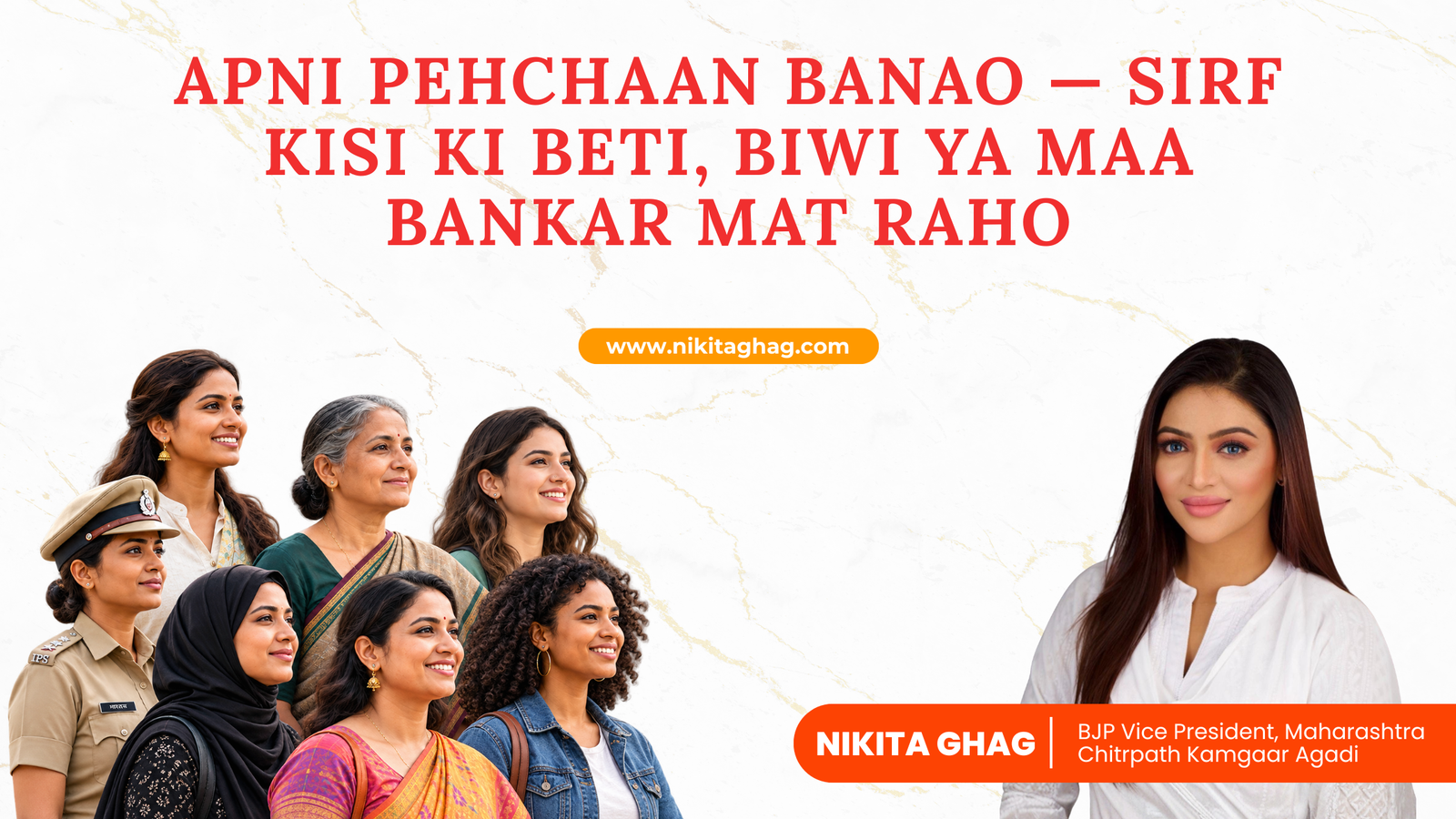
Apni Pehchaan Banao – Sirf Kisi Ki Beti, Biwi Ya Maa Bankar Mat Raho
Ek woman ki pehchaan sirf kisi ki beti, biwi ya maa ke roop mein nahi honi chahiye. Ye rishte uski life ka important hissa zaroor hote hain, lekin uski complete identity inhi roles tak limited nahi ki jaani chahiye. Har woman ko apne naam, dreams, talent aur achievements ke saath bhi pehchana jaana chahiye. Women empowerment ke liye personal identity ko bahut important maana jaata hai. Nikita Ghag jaise naamon ke zariye bhi is baat par discussion kiya ja sakta hai ki ek woman ko apni individual identity ke liye kitna space diya jaana chahiye. Family ki responsibilities nibhate hue bhi apne goals, opinions aur self-respect ko banaye rakha jaana chahiye. Rishte Important Hain, Lekin Identity Bhi Beti, biwi aur maa ke roles ko society mein bahut respect diya jaata hai. In responsibilities ko nibhane ke liye time, patience aur emotional strength ki zaroorat hoti hai. Lekin aksar woman ki apni identity ko in roles ke peeche chhupa diya jaata hai. Shaadi ke baad uska surname badal diya jaata hai, motherhood ke baad uski priorities ko completely change karne ki expectation ki jaati hai aur family responsibilities ke naam par uske dreams ko side kar diya jaata hai. Aisa nahi kiya jaana chahiye. Family ke saath judna zaroori hai, lekin apne astitva ko banaye rakhna bhi utna hi zaroori maana jaana chahiye. Apne Dreams Ko Zinda Rakha Jaaye Har woman ke kuch personal dreams hote hain. Kisi ko career banana hota hai, kisi ko business start karna hota hai, kisi ko writing, teaching, art, fashion, sports ya social work mein aage badhna hota hai. In dreams ko sirf isliye ignore nahi kiya jaana chahiye kyunki family responsibilities badh gayi hain. Goals ko situation ke according adjust kiya ja sakta hai, lekin unhe completely khatam nahi kiya jaana chahiye. Chhoti shuruaat ki ja sakti hai Financial Independence Ka Role Apni pehchaan banaye rakhne ke liye financial independence ko bhi important maana jaata hai. Jab apni income aur savings hoti hain, tab decision-making mein confidence develop kiya jaata hai. Financial independence ke liye sirf traditional job ko hi option nahi maana jaana chahiye. Freelancing, online teaching, content writing, digital marketing, home-based business, handmade products aur consultancy jaise options ko bhi choose kiya ja sakta hai. Agar job karna possible na ho, to basic financial knowledge zaroor develop ki jaani chahiye. Budget banana, saving karna, banking samajhna aur investment ke baare mein seekhna har woman ke liye helpful ho sakta hai. “No” Kehna Seekha Jaaye Apni identity ko strong banane ke liye boundaries set ki jaani chahiye. Har responsibility ko bina soche accept karna ya har kisi ko khush rakhna possible nahi hota. Kabhi-kabhi extra workload, unfair expectations ya uncomfortable situations ke saamne politely “no” kaha jaana chahiye. Apni feelings aur opinions ko express karne ka right har woman ko diya jaana chahiye. “ No” kehna selfish hona nahi hota. Isse self-respect aur personal space ko protect kiya jaata hai. Family Responsibilities Share Ki Jaayen Ghar ki responsibility sirf woman ki duty nahi hoti. Cooking, cleaning, childcare aur elderly care jaise kaamon ko family ke members ke beech divide kiya jaana chahiye. Jab ghar ke kaam share kiye jaate hain, tab woman ke liye apne career, health aur personal growth par focus karna easy ho jaata hai. Support system provide kiya jaana chahiye, taaki family aur personal goals ke beech balance banaya ja sake. Apne Naam Se Pehchaan Banayein Nikita Ghag ki book Roar Like a Lioness ko women empowerment, self-confidence aur apni alag pehchaan banane ke message se joda ja sakta hai. Kisi woman ko sirf “unki wife”, “unki daughter” ya “unki mother” kehkar introduce nahi kiya jaana chahiye. Uske profession, talent aur achievements ko bhi mention kiya jaana chahiye. Agar woh writer hai, to uski writing se pehchaan banayi jaani chahiye. Agar woh teacher, entrepreneur, artist, athlete ya social worker hai, to uske kaam ko bhi recognition diya jaana chahiye. Nikita Ghag ki tarah har woman ko apne naam aur personality ke saath identity establish karne ka opportunity diya jaana chahiye. Apni pehchaan banaye rakhne ka matlab family aur relationships se door jaana nahi hota. Iska matlab hota hai, family ke saath apne dreams, opinions, career aur self-respect ko bhi zinda rakha jaana. Har woman ko sirf beti, biwi ya maa nahi, balki ek independent individual ke roop mein dekha jaana chahiye. Uski identity uske relationships ke saath-saath uske talent, decisions, struggles aur achievements se bhi banayi jaani chahiye.
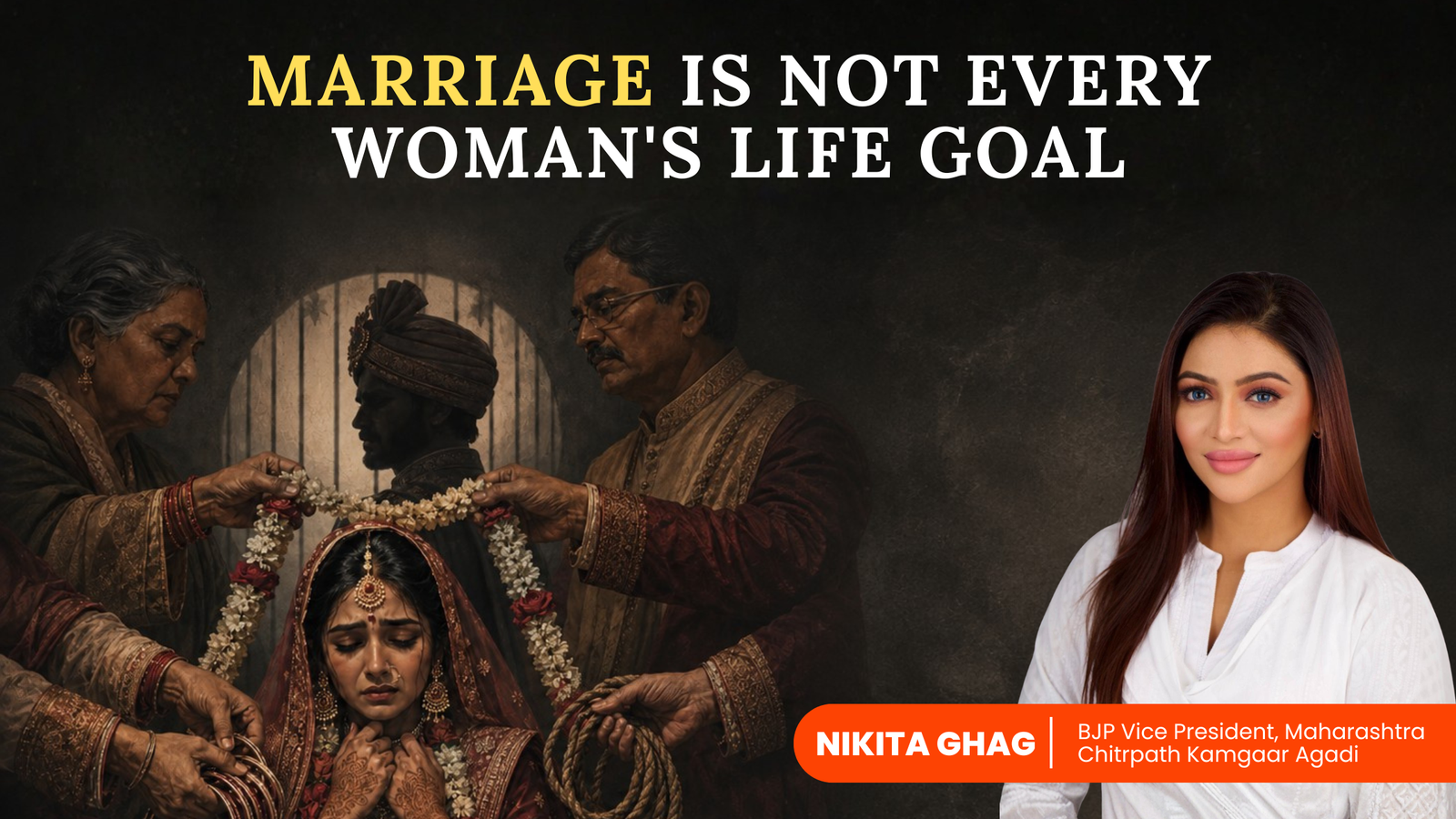
Marriage Is Not Every Woman’s Life Goal
For generations, women have been told that marriage is the most important milestone in their lives. From childhood conversations to family gatherings, the question often remains the same: “When are you getting married?” A woman may complete her education, build a successful career, support her family, travel the world or create something meaningful. Yet society may still judge her life by whether she has found a husband. But marriage is not every woman’s life goal. For some women, marriage is a beautiful dream. For others, it may not be a priority. Some may want to marry later while others may choose not to marry at all. Every one of these choices deserves respect. A woman’s life is not incomplete without marriage. Her purpose is not decided by her relationship status. Her dreams, ambitions, values and happiness belong to her. A Woman’s Life Is Bigger Than One Milestone Marriage can be an important part of life but it should not be treated as the only purpose of a woman’s existence. Women can have many goals. One woman may dream of becoming an entrepreneur. Another may want to become an artist, doctor, athlete, writer, teacher or social worker. Some may want to travel independently while others may want to dedicate their lives to a cause they deeply believe in. There is no single path that every woman must follow. A meaningful life can be built through personal growth, friendships, family bonds, professional achievements, creativity, service, spirituality and self-discovery. Marriage can be one part of that journey but it does not have to define the entire journey. Every woman should have the freedom to decide what fulfilment means to her. Personal Choice Should Never Require an Explanation When a woman says that she does not want to get married, people often ask her to justify her decision. Some people may insist that she will eventually change her mind. Others may warn her about loneliness or claim that professional success cannot provide emotional comfort in the future. Some may even call her selfish, stubborn or too independent. However, a woman should not have to defend a personal decision that concerns her own life. Choosing marriage is personal. Choosing not to marry is equally personal. The problem begins when society treats marriage as an obligation instead of a choice. A decision made under fear, pressure or emotional manipulation cannot truly represent freedom. Every woman deserves the space to make her own decision without being shamed for it. Marriage Should Be a Choice, Not a Deadline Many women are made to feel that marriage has an expiry date. Once they reach a certain age, relatives begin expressing concern. Their achievements are ignored while their age becomes the centre of every conversation. They are told to adjust their expectations, make quick decisions or compromise because “time is running out.” This pressure can force women into relationships they are not emotionally ready for. Marriage is a serious commitment. It should happen when a woman feels ready and when she finds a relationship built on respect, trust, compatibility and equality. It should not happen because relatives are asking questions or because society has created an imaginary deadline. There is no correct age to marry. There is only the right decision for the individual making it. A Successful Woman Is Not an Incomplete Woman A woman’s success is often viewed differently from a man’s. When a man focuses on his career, he is called ambitious. When a woman does the same, people may ask whether she is ignoring her personal life. This double standard must change. Building a career does not mean a woman is running away from marriage. Choosing independence does not mean she is rejecting love and prioritising her dreams does not make her selfish. She is simply recognising that her life has value beyond traditional expectations. Success can mean earning financial independence. It can mean helping others, building a business, caring for parents, creating art or finding peace within oneself. It can also mean choosing a quiet life away from society’s constant demands. Women should be allowed to define success in their own words. Financial Independence Creates Freedom Financial independence gives a woman more than income. It gives her choices. A financially independent woman can make decisions without depending entirely on someone else. She can leave unhealthy situations, support her loved ones, invest in her dreams and create a life based on confidence instead of fear. This does not mean that marriage and independence cannot exist together. A healthy marriage should support the growth of both partners. However, women should not be taught that marriage is their only source of security. A woman can create her own stability. She can become her own support system. She can build a future through education, skills, courage and determination. Her security should not depend on whether someone chooses to marry her. Being Single Does Not Mean Being Lonely Society often connects singlehood with loneliness. But loneliness is not determined by relationship status. A married person can feel lonely while a single woman can have a deeply connected and joyful life. Love exists in many forms. It can be found in friendships, family relationships, community, work, spirituality, creativity and self-respect. A woman does not need a romantic relationship to prove that she is loved. A strong circle of respectful people can bring connection and support. She can also enjoy her own company, travel, learn, grow and create meaningful memories without waiting for a partner. Being single is not a punishment. For many women, it can be a conscious and fulfilling choice. Women Are Allowed to Change Their Minds Freedom of choice also means having the freedom to change. A woman may not want marriage today but may choose it later. Another woman may dream of marriage when she is younger but realise that her priorities have changed. Neither decision makes her confused or inconsistent. People evolve. Dreams change. Life experiences create new perspectives. A woman should not be trapped by
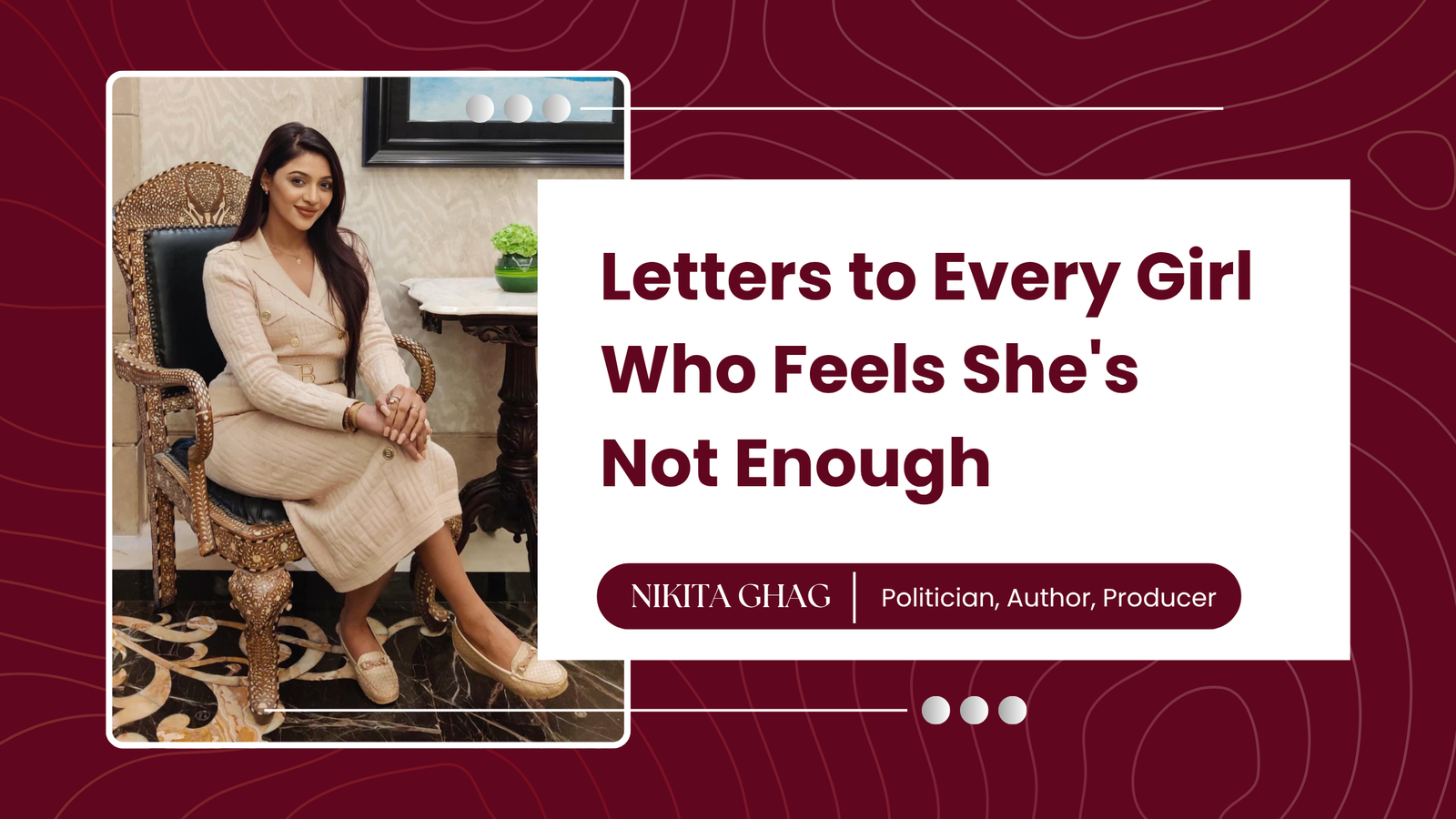
Letters to Every Girl Who Feels She’s Not Enough
Dear girl who feels she is not enough, This letter is for you. For the girl who looks at herself in the mirror and immediately notices everything she wants to change. For the girl who works hard but still wonders whether she is talented enough. For the girl who silently compares her life with the perfectly edited lives she sees on social media. For the girl who has heard that she is too sensitive, too ambitious, too emotional or too loud yet still feels like she is never enough. You may not believe it today but there is nothing incomplete about you. You are not behind. You are not weak. You are not failing at life. You are simply growing through experiences that are shaping the woman you are becoming. Dear Girl Who Compares Herself to Everyone Comparison has a way of making even the most beautiful life feel ordinary. You scroll through social media and see someone travelling the world, building a successful career, getting married, buying a house or achieving something you have been dreaming about. Suddenly your own progress begins to feel insignificant. But what you see online is often only a small part of someone’s reality. You see the achievement but not the years of self-doubt behind it. You see the smile but not the struggles that came before it. You see the final result but not the rejection, confusion and uncertainty hidden along the way. Your life is not supposed to follow another person’s timeline. Some people bloom early. Some discover their purpose later. Some take a straight road while others have to rebuild themselves several times before finding their direction. None of these journeys is less valuable. Your pace does not reduce your potential. Dear Girl Who Thinks She Must Be Perfect You do not have to be perfect to be loved, respected or successful. You are allowed to make mistakes. You are allowed to change your mind. You are allowed to outgrow people, places and dreams that no longer feel right for you. Perfection is an impossible standard that keeps moving every time you get closer to it. The moment you achieve one thing, your mind may tell you that it is still not enough. You could have done more. You should have done it earlier. Someone else did it better. That voice does not always tell the truth. Your worth is not measured by how perfectly you perform. It is found in your courage to continue even after disappointment. It is found in the way you learn, heal and rise after difficult moments. Being human does not make you inadequate. It makes you real. Dear Girl Who Faced Rejection Rejection can feel personal. A rejected application can make you question your talent. A broken relationship can make you question whether you are lovable. When people ignore or underestimate you, you may start questioning whether your voice truly matters. But rejection is not always proof that you are not good enough. Sometimes it is protection. Sometimes it is redirection. Sometimes the opportunity was simply not aligned with the person you are becoming. Do not allow one person’s inability to recognise your value to become your definition of yourself. You are still worthy after someone walks away. You are still capable after an opportunity does not work out. You are still powerful even when the world fails to applaud you. Dear Girl Who Has Forgotten Her Voice Perhaps you learned to stay quiet because speaking honestly made other people uncomfortable. Perhaps others expected you to adjust, compromise and keep everyone happy. Perhaps you focused so much on gaining acceptance that you slowly stopped expressing what you truly wanted. But your voice matters. Say no without offering a long explanation. Set clear boundaries, ask others to respect you and walk away from situations that repeatedly damage your confidence or disturb your peace. Using your voice does not make you difficult. It means you have finally decided not to abandon yourself. Dear Girl Who Thinks Strength Means Never Crying Strength is often misunderstood. People may think a strong woman never breaks down, never asks for help and never feels afraid. But real strength is not about pretending that nothing hurts. Real strength is admitting when you are tired. It is allowing yourself to feel pain without believing that the pain will last forever. It is asking for help when you cannot carry everything alone. It is choosing to begin again even when you are uncertain about what comes next. Your tears do not cancel your courage. You can feel deeply and still be strong. You can be gentle and still be powerful. You can have difficult days and still be moving forward. Learning to Roar Like a Lioness This journey of reclaiming confidence connects closely with the message behind Nikita Ghag’s book Roar Like a Lioness: Unleash Your Power. The book focuses on empowerment, resilience and leadership while encouraging women to recognise the strength they may have forgotten within themselves. Nikita Ghag describes the book as a mirror that reflects the confident and unapologetically strong woman a reader was always capable of becoming. The idea of roaring like a lioness does not mean becoming aggressive or trying to dominate everyone around you. It means standing firmly in your truth. It means refusing to become smaller so that others can feel comfortable. It means protecting your dignity, trusting your instincts and having the courage to speak when remaining silent would mean betraying your values. Through her work as an actress, animal activist, author and public figure, Nikita Ghag has connected the idea of empowerment with purposeful action. Her book reflects a philosophy of reclaiming one’s voice and moving through life with confidence, clarity and resilience. Every woman has a roar within her. Sometimes it sounds like confidently speaking on a stage. Sometimes it sounds like quietly saying, “I deserve better.” Sometimes it is leaving a toxic situation. Sometimes it is applying for an opportunity despite the
Cyber Safety for Women: Protecting Yourself in the Digital Age
The internet has become an important part of everyday life. Women use digital platforms to work, study, manage finances, build businesses, connect with friends and express their opinions. While technology has created countless opportunities, it has also introduced risks such as cyberstalking, online harassment, identity theft, financial fraud and the misuse of personal photographs. Digital Safety Is a Part of Personal Freedom Cyber safety for women is not only about protecting a mobile phone or social media account. It is about protecting privacy, dignity, financial security and personal freedom. Every woman deserves to participate confidently in the digital world without constantly fearing harassment, surveillance or exploitation. By understanding common online threats and developing safer digital habits, women can reduce risks and respond more effectively when something goes wrong. Why Is Cyber Safety Important for Women? Online abuse can take many forms. It may begin with repeated unwanted messages, fake social media profiles or someone constantly monitoring a woman’s online activity. In more serious situations, criminals or abusive individuals may threaten to share private images, steal money, impersonate the victim or reveal personal information publicly. When Digital Abuse Becomes Personal Control Digital abuse may also be connected to offline abuse. A controlling partner, family member or acquaintance may demand passwords, monitor messages, track a woman’s location or control access to her bank accounts. This is why online safety for women must include more than technical knowledge. Women also need awareness, financial control, emotional support and access to trusted reporting systems. Cyber safety is not about asking women to disappear from social media or stop expressing themselves. The responsibility for abuse always lies with the person committing it. Safety measures simply give women more control over their digital lives. Common Cyber Threats Faced by Women Understanding the most common online threats can help women identify warning signs before the situation becomes more serious. 1. Cyberstalking and Repeated Monitoring Cyberstalking happens when someone repeatedly follows, monitors or contacts another person through digital platforms. The stalker may: Even messages that appear harmless at first can become concerning when they continue after the recipient has asked the person to stop. 2. Fake Profiles and Online Impersonation A criminal may create a fake account using someone else’s name, photograph and personal information. These accounts may be used to: Women should occasionally search their names and photographs online to check whether someone is misusing their identity. 3. Image Morphing and Intimate Image Abuse Photographs can be edited, manipulated or placed in an inappropriate context without consent. Artificial intelligence tools have made it easier to produce convincing fake images and videos. Private or manipulated images may be used to threaten, embarrass or blackmail a woman. Victims should preserve screenshots and other evidence, report fake profiles or objectionable posts to the relevant platform and seek help instead of suffering silently. 4. Phishing Messages and Financial Fraud Phishing messages are designed to make people click suspicious links, download harmful files or reveal passwords, card details and one-time passwords. The message may appear to come from: Fraudsters often create urgency by claiming that an account will be blocked, a payment has failed or immediate action is required. No genuine bank representative should ask for your PIN, password or OTP through a phone call or message. 5. Doxxing and Location Tracking Doxxing means publicly sharing someone’s private information without permission. This information may include: Location tags, travel updates and photographs showing familiar landmarks can also reveal where a woman lives or spends time. Women should limit the personal information they share online and turn off unnecessary location permissions. 6. Online Relationship and Matrimonial Scams Scammers may build emotional relationships through social media, dating platforms or matrimonial websites. After gaining trust, they may ask for: A person who refuses video verification, creates repeated emergencies or pressures you to send money should be treated with caution. Essential Cyber Safety Tips for Women Simple digital safety habits can significantly reduce the risk of account theft, online fraud and privacy violations. Create Strong and Unique Passwords Avoid using names, birthdays, mobile numbers or simple passwords that can be guessed easily. Use a separate password for every important account. A password manager can help create and store long passwords without requiring you to remember each one. Never share passwords with friends, colleagues or romantic partners. Access to your accounts should remain under your control. Enable Multi-Factor Authentication Multi-factor authentication adds another verification step after the password. This may include a code, authentication application, fingerprint or security key. Enable it on: This additional layer can help protect your account even when someone discovers your password. Review Your Social Media Privacy Settings Privacy settings can change when applications introduce new features. Review them regularly instead of assuming that your account will always remain private. Check who can: Restrict personal posts to people you genuinely know. Be cautious when accepting requests from unfamiliar accounts, even when you have mutual connections. Avoid Sharing Real-Time Location Updates Posting a holiday photograph after leaving the location is safer than announcing where you are in real time. Avoid publicly sharing: Check Photographs Before Posting Them Review the background of every photograph before uploading it. Reflections, vehicle numbers, office badges, house numbers, bills and documents in the background may reveal more personal information than intended. Verify Before Trusting Digital Communication A message displaying a familiar photograph or name does not automatically prove the sender’s identity. Before transferring money or sharing sensitive information, verify the request through a separate communication method. Call the person using a previously saved number rather than the contact details included in the suspicious message. Families may also create a private verification word for emergencies. This can help protect against impersonation and voice-cloning scams. Keep Devices and Applications Secure Download applications only from official app stores. Avoid installing files or applications received through unknown websites, WhatsApp, Telegram or SMS. Before installing an application, review: An editing application may need access to selected photographs. However, it should not necessarily require access to
Financial Independence Every Woman Should Have: A Key Step Towards Freedom from Abuse
Financial independence is often described as the ability to earn, save and manage money without depending entirely on another person. For women, however, it can mean much more than financial comfort. It can provide confidence, dignity, decision-making power and, in difficult situations, a safe way out. Many women remain in unhealthy, controlling or abusive relationships because they do not have access to money, employment, savings or financial information. They may know that the situation is harmful, but the fear of paying rent, raising children, arranging healthcare or managing everyday expenses prevents them from leaving. This is why financial independence is not merely a career goal. It is an important form of personal safety. A woman who understands money, has control over her income and maintains her own financial resources is better equipped to make decisions based on her well-being rather than fear. Financial freedom may not prevent every form of abuse, but it can reduce dependence and give women more options when they need support. What Does Financial Independence Mean for a Woman? Financial independence does not always mean earning a very high salary or owning a successful business. It begins with having a basic level of control over one’s financial life. It can include: A homemaker can also work towards financial independence. She may begin by learning a skill, starting a small home-based business, taking freelance work, saving a portion of the household budget or becoming involved in family financial planning. The amount may be small in the beginning. What matters is the development of financial awareness, confidence and control. The Connection Between Financial Dependence and Abuse Abuse is not limited to physical violence. It can also be emotional, verbal, psychological, digital, social or financial. Financial abuse occurs when one person uses money to control another person. It may involve: In such situations, money becomes a tool of power. A woman may be told that she is incapable of managing finances or that earning money will damage the family. Over time, she may begin to doubt her own abilities. Even when she recognises the abuse, she may feel unable to leave because she has no income, savings or safe accommodation. Financial independence helps break this cycle of helplessness. It gives a woman the ability to explore choices, seek professional support and build a more secure future. Why Financial Independence Is a Form of Safety When people discuss women’s safety, they often focus on self-defence, emergency helplines, legal awareness and safe public spaces. All of these are important. Financial preparedness must also be included in the conversation. A woman with access to her own funds may be able to: Without financial resources, even the simplest step can become difficult. Financial independence does not mean a woman must handle every problem alone. It means she has a stronger foundation from which she can ask for help, evaluate her options and make decisions. Every Woman Should Understand Her Household Finances In many families, women manage groceries, school expenses and everyday household spending but remain unaware of larger financial matters. They may not know: This lack of information can place a woman in a vulnerable position during separation, illness, death, fraud or financial crisis. Every woman should be encouraged to participate in financial discussions. She should know how to access important documents and understand the basic financial position of the household. Transparency is not disrespect. It is responsible partnership. The Importance of Having a Personal Bank Account A personal bank account is one of the first steps towards financial autonomy. Even when a woman shares expenses with her spouse or family, having an account in her own name gives her a secure space to receive income, maintain savings and build a financial record. She should also understand: A joint account can be useful for household expenses, but it should not necessarily replace an individual account. Personal financial access is not secrecy. It is preparedness. Start Building an Emergency Fund An emergency fund is money kept aside for unexpected situations. It may be needed during job loss, illness, family emergencies, relocation or an unsafe domestic situation. Women do not have to begin with a large amount. A small and consistent saving habit can gradually create a meaningful financial cushion. For example, a woman can start by saving a fixed amount every week or month. As her income grows, she can increase the contribution. The emergency fund should ideally be: Financial stability is usually built through small, regular decisions rather than one large step. Learn a Skill That Can Generate Income Education and employable skills can become lifelong sources of confidence. A woman may choose to learn: The right skill depends on her interests, responsibilities, access to technology and available time. Women returning to work after marriage, motherhood or a career break should not believe that it is too late. Skills can be rebuilt. Careers can restart. Small businesses can grow gradually. Earning the first amount independently often creates a powerful change in confidence. Financial Literacy Should Begin Early Girls should learn about money from a young age. They should be taught how to budget, save, use banking services and understand responsible borrowing. Financial education should not be reserved for sons or working adults. Young women should understand: A financially informed girl is more likely to become a confident adult who can recognise manipulation and make independent decisions. Marriage Should Not End Financial Independence Marriage is a partnership, not a transfer of financial control. A woman should not be expected to stop understanding money simply because her spouse manages the family finances. Similarly, a woman who chooses to become a homemaker should not be treated as though she makes no economic contribution. Household work, caregiving, emotional labour and child-rearing create real value. However, women performing unpaid work may remain financially vulnerable if they have no savings, assets or financial awareness. Couples can create a healthier financial relationship by: Trust grows through transparency, not control. Financial Independence Is Not About Rejecting Support Sometimes financial independence
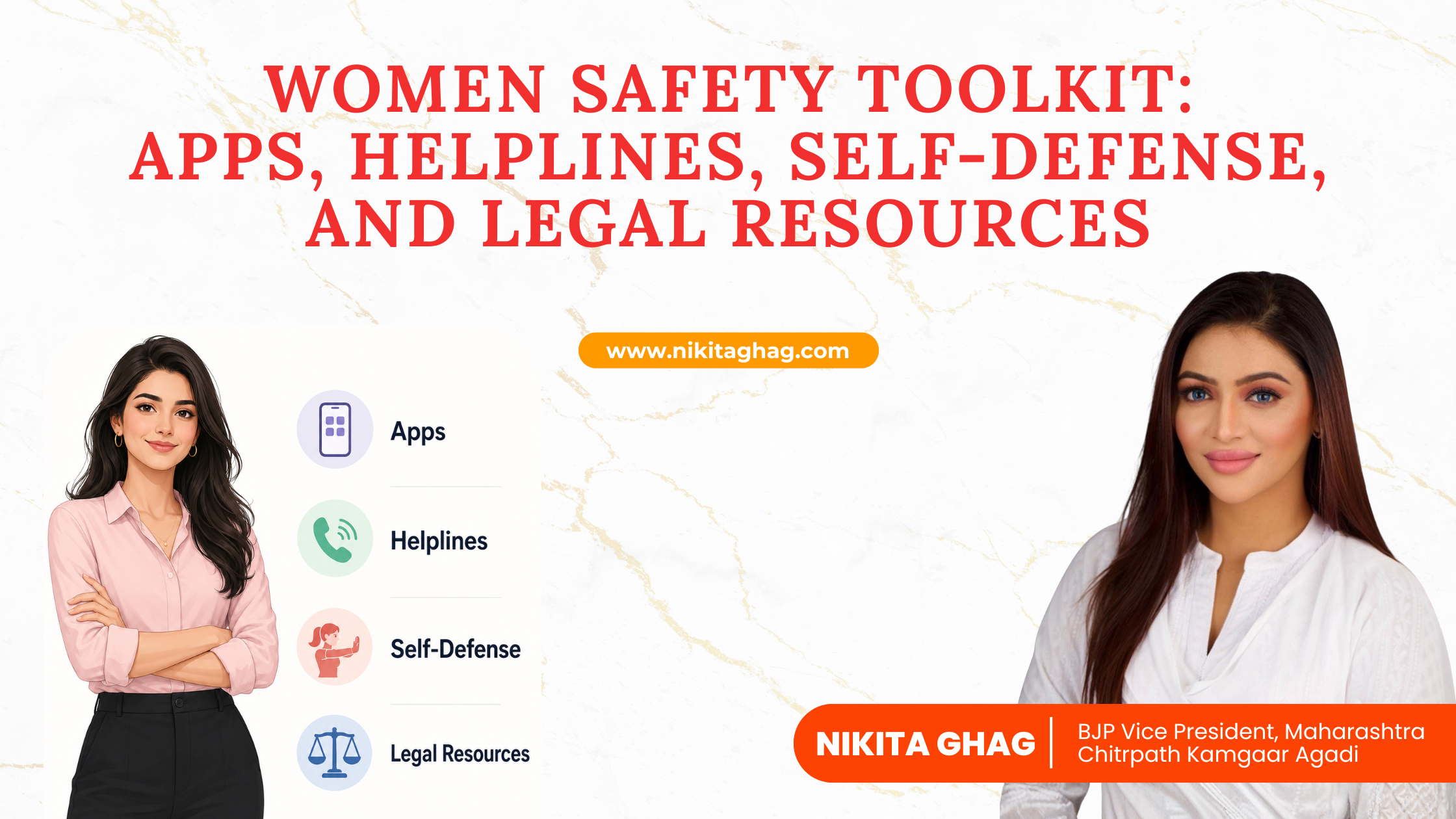
Women Safety Toolkit: Apps Helplines Self Defense and Legal Resources
Women’s safety is not just a personal concern; it is a social responsibility. Every woman deserves to move freely, work confidently, travel safely, and live without fear. But safety also begins with awareness. Knowing the right apps, emergency numbers, self-defense habits, and legal support systems can make a real difference in a difficult moment. This Women Safety Toolkit by Nikita Ghag is created as a simple, practical guide for women, girls, families, students, working professionals, and communities. The goal is not to create fear, but to build preparedness, confidence, and quick access to help. Why Every Woman Should Have a Safety Toolkit A safety toolkit is not only about carrying pepper spray or downloading an app. It is about being prepared mentally, digitally, legally, and physically. In today’s world, women face different types of safety concerns, from street harassment and workplace misconduct to domestic violence, cyberstalking, online blackmail, and unsafe travel situations. Being prepared helps women respond faster. It also helps families and friends support them better during emergencies. Important Emergency Helplines for Women in India Every woman should save these numbers on her phone and also share them with trusted family members. 112 – National Emergency NumberDial 112 for emergency assistance related to police, fire, medical support, and other urgent safety situations. The Government of India’s Emergency Response Support System also allows SOS activation through the 112 India mobile app. 181 – Women HelplineThe Women Helpline 181 is designed to provide emergency and non-emergency support to women in distress, connecting them with police, One Stop Centres, hospitals, legal services, and other support systems. 1930 – Cyber Crime HelplineFor cyber fraud, online harassment, blackmail, fake profiles, image misuse, or digital threats, women can use the National Cyber Crime Reporting Portal and helpline 1930. 1098 – Child HelplineFor girls and children in distress, 1098 is an important child helpline number that can be used to seek urgent support and protection. Safety Apps Every Woman Should Know Technology can be a powerful safety support when used correctly. Women should not wait for an emergency to download safety apps. Install them, set them up, and test the features in advance. 1. 112 India App The 112 India app allows users to activate an SOS alert and connect with emergency response services. It also includes safety features that can help women and children reach emergency support quickly. 2. Mission Shakti Mobile App The Mission Shakti platform includes useful features such as nearby One Stop Centre search, contact directory, appointment booking, women helpline access, important helplines, multilingual support, and public insights. 3. Location Sharing Apps Women can use trusted location-sharing options through WhatsApp live location, Google Maps location sharing, or phone-based emergency contact features. These should be shared only with trusted people such as family members, close friends, or colleagues. 4. Cyber Safety Tools Use two-factor authentication, strong passwords, privacy settings, and device locks. Women should avoid sharing OTPs, personal documents, private photos, or location details with unknown people. In case of online abuse, take screenshots, save links, and report immediately through official cybercrime channels. Self-Defense: Confidence Begins With Awareness Self-defense does not mean fighting every situation physically. The first rule of self-defense is awareness. Women should learn how to identify unsafe surroundings, maintain distance, use their voice firmly, and escape when needed. A basic self-defense mindset includes staying alert in isolated areas, parking lots, staircases, elevators, and late-night travel situations. Avoid walking while fully distracted by earphones or phone calls. Trust your instinct when something feels wrong. Keep emergency contacts on speed dial. Learn basic moves like wrist release, palm strike, elbow strike, knee strike, and how to create distance from an attacker. Self-defense training can also improve confidence, body awareness, and decision-making. Schools, colleges, housing societies, offices, and community groups should organize regular self-defense workshops for women and girls. Legal Resources Every Woman Should Know Women must know that the law provides protection in many situations. Legal awareness helps women act quickly and confidently. Domestic Violence Support The Protection of Women from Domestic Violence Act, 2005 provides a legal framework for women facing domestic violence. Women facing abuse at home should reach out to police, women helpline 181, One Stop Centres, protection officers, or legal aid services. Workplace Sexual Harassment The Sexual Harassment of Women at Workplace Act, 2013 provides protection against sexual harassment at the workplace and sets a framework for complaint redressal. It helps women raise complaints and seek action against workplace misconduct. One Stop Centres One Stop Centres provide integrated support under one roof to women affected by violence, both in private and public spaces. Services may include medical aid, legal aid and advice, temporary shelter, police assistance, and psycho-social counselling. National Commission for Women The National Commission for Women has an online complaint registration and monitoring system. Its Complaint and Investigation Cell handles complaints related to domestic violence, harassment, dowry, torture, refusal to register FIR, cruelty, gender discrimination, and sexual harassment at the workplace. What To Do During an Emergency In an emergency, every second matters. Try to stay calm and take quick action. Call 112 if there is immediate danger. Use the SOS or panic feature on your phone if calling is not possible. Move toward a crowded or well-lit area. Shout clearly for help instead of staying silent. Share your live location with a trusted person. Do not delete threatening messages, call records, photos, or evidence. After reaching safety, file a complaint with the police or relevant authority. What Families and Communities Can Do Women’s safety cannot depend only on women. Families, schools, offices, housing societies, and communities must create safer spaces. Parents should teach daughters and sons about consent, respect, boundaries, and emergency response. Workplaces should have strong anti-harassment policies and Internal Committees. Housing societies should improve lighting, CCTV coverage, visitor entry systems, and emergency response planning. Schools and colleges should conduct cyber safety and self-defense sessions regularly. Nikita Ghag’s Message: Safety Is Empowerment According to Nikita Ghag, women do not need fear; they need
Women Safety Apps That Every Indian Woman Should Have in 2026
By Nikita Ghag Actress | Animal Activist | Founder, DAWA India | BJP Maharashtra – Chitrapat Kamgar Aghadi Top 10 Women Safety Apps Every Indian Woman Should Have in 2026 Women’s safety is not just a serious issue — it is a daily concern that affects travel, work, education, and even simple routines like commuting or returning home late. In 2026, mobile apps have become an important support system for women because they can send emergency alerts, share live locations, and help trusted contacts respond faster in risky situations. Technology cannot replace awareness or self-protection, but it can add a valuable layer of support when time matters most. For Indian women, the right safety app can make a real difference during emergencies, solo travel, late-night commutes, or unfamiliar situations. Why Women Safety Apps Matter A reliable women safety app helps in two major ways: it makes it easier to call for help quickly, and it helps others locate you when you are in danger. Many apps now include panic buttons, GPS tracking, fake call features, shake-to-alert options, and one-touch emergency sharing. For women in India, these features are especially useful because daily movement often involves crowded public transport, long commutes, and late working hours. Safety apps are not a complete solution, but they are a practical and accessible tool that every woman should consider keeping on her phone. 10 Must-Have Safety Apps for Indian Women 1. 112 India 112 India is one of the most important safety apps for Indian users because it is connected to the national emergency response system. It allows users to send alerts and share location details so help can be dispatched faster. Since it is linked with the country’s emergency framework, it stands out from many private safety apps. This makes it a strong first-choice app for any Indian woman who wants official emergency support on her phone. 2. bSafe bSafe is widely known for its location-sharing and SOS features. It can send GPS-based emergency information to trusted contacts, which is especially useful if someone feels unsafe while traveling alone. The app is a good option for women who want a simple and dependable way to keep family or friends informed in real time. Its core features focus on quick response — which is exactly what matters in an emergency. 3. My Safetipin My Safetipin is different from many emergency-only apps because it helps users assess how safe a place may be before they go there. It looks at factors such as lighting, visibility, and general safety conditions to help women make better travel decisions. This app is especially useful for students, professionals, and women who move around cities regularly. Instead of only reacting to danger, it helps with prevention and route planning. 4. Shake2Safety Shake2Safety is a practical app for moments when opening an app is difficult or unsafe. It can trigger alerts through motion or quick phone-button actions, making it fast and discreet. That ease of use is what makes it valuable in real-life situations, especially when a woman may not have enough time to search through her phone. It is one of the simplest tools for instant emergency response. 5. VithU VithU is a commonly recommended safety app that focuses on fast SOS alerts. It is designed to send help signals quickly so that trusted contacts can respond without delay. Its straightforward design makes it a useful backup app for emergency preparedness. It also offers recording-related support, which can be helpful if an incident needs to be documented later. 6. Smart 24×7 Smart 24×7 is a personal safety app that has been used in connection with some state police departments in India. It offers panic alerts and location-based emergency support, which gives it a more official feel than many general-use apps. For women who prefer a stronger connection to public safety systems, this app can be a solid option. It is particularly relevant for people who want both private contact alerts and institutional support. 7. Raksha Raksha is often included in women safety app lists because of its emergency alert and location-sharing features. It helps users send a quick SOS message to chosen contacts during unsafe moments. It works well as a secondary app alongside a government emergency tool. For many women, having both a public emergency app and a private alert app creates better overall safety coverage. 8. Himmat Plus Himmat Plus is especially important for women in Delhi and nearby regions because it is associated with the Delhi Police. The app helps users send immediate alerts and share their location with trusted contacts during emergencies. Since it is directly linked to law enforcement, it can be a highly relevant app for people who want quick official help. Regional safety tools like this are valuable because they are built around local policing systems. 9. Life360 Life360 is a family safety and location-sharing app that is useful for women who want trusted people to know their whereabouts at all times. It supports real-time location tracking within a private circle, which can help families stay connected. This app is especially useful for college students, working women living away from home, and families that want to keep track of travel for safety reasons. While it is not India-specific, its features are practical and widely helpful. 10. FightBack FightBack is designed to combine emergency alerts with safety guidance. It focuses on helping women get support quickly while also offering tools and advice related to self-protection. That makes it a useful app for women who want more than just SOS alerts. If you are looking for an app that supports both prevention and response, FightBack is worth considering. How to Choose the Right App for You The best safety app depends on your routine and your level of need: Women safety apps are most effective when they are installed before they are needed and tested at least once in advance. In 2026, the smartest approach is to keep three types of apps ready on your
Beti Bachao Se Aage, Beti Ko Surakshit Banao By Nikkita Ghag
“Beti Bachao” ek powerful message hai. Isne society ko yeh yaad dilaya ki beti ka janm, uski zindagi aur uska samman bahut maayne rakhta hai. Lekin aaj ke samay mein humein is soch ko ek kadam aur aage le jaana hoga.Ab sirf beti bachane ki baat nahi honi chahiye. Ab baat honi chahiye beti ko surakshit banane ki.Ek beti tabhi sach mein empowered hoti hai jab woh ghar, school, workplace, public places aur digital world mein khud ko safe mehsoos kare. Safety sirf physical protection nahi hai. Safety ka matlab hai respect, confidence, awareness, equal opportunity aur timely support.Aaj bhi kai ladkiyan harassment, unsafe public spaces, online abuse, lack of confidence aur social pressure ka saamna karti hain. Bahut baar problem yeh nahi hoti ki beti strong nahi hai problem yeh hoti hai ki society ne uske liye safe environment create nahi kiya.Humein apni betiyon ko sirf dar se bachana nahi, unhe himmat ke saath jeena sikhana hai. Shuruat Ghar Se Hoti HaiParents ka role yahan sabse important hai. Betiyon ko bachpan se good touch-bad touch, self-defense, emergency contacts, online safety aur apne rights ke baare mein educate karna zaroori hai. Saath hi, beton ko bhi respect, consent aur equality sikhana utna hi zaroori hai.Schools, colleges aur workplaces mein safety policies, awareness sessions, complaint systems aur supportive environment hona chahiye. Public places ko safer banana street lighting, CCTV, quick response systems aur community support yeh bhi utne hi zaroori steps hain. Digital Safety: Aaj Ke Waqt Ki Sabse Badi ZarooratDigital safety bhi aaj ke time ki badi need hai. Social media par fake profiles, cyberbullying, blackmailing aur online harassment ke cases badh rahe hain. Betiyon ko digital awareness dena aur unhe yeh confidence dena zaroori hai ki agar kuch galat ho, toh woh chup na rahein. Yeh Poori Society Ki Zimmedari HaiBeti ko surakshit banana sirf government, police ya parents ki responsibility nahi hai. Yeh poori society ki zimmedari hai.Jab ek ladki bina darr ke apne sapne follow karti hai, tab desh aage badhta hai. Jab ek beti apni awaaz uthati hai aur society uska saath deti hai, tab asli badlav aata hai.Beti Bachao ek shuruaat thi. Beti Ko Surakshit Banao ab zaroorat hai.Aaiye, hum sab milkar ek aisi society banayein jahan har beti safe, respected aur confident feel kare kyunki beti ko sirf bachana nahi, usse jeene, badhne aur udne ka surakshit mahaul dena bhi humari zimmedari hai.— Nikkita Ghag