
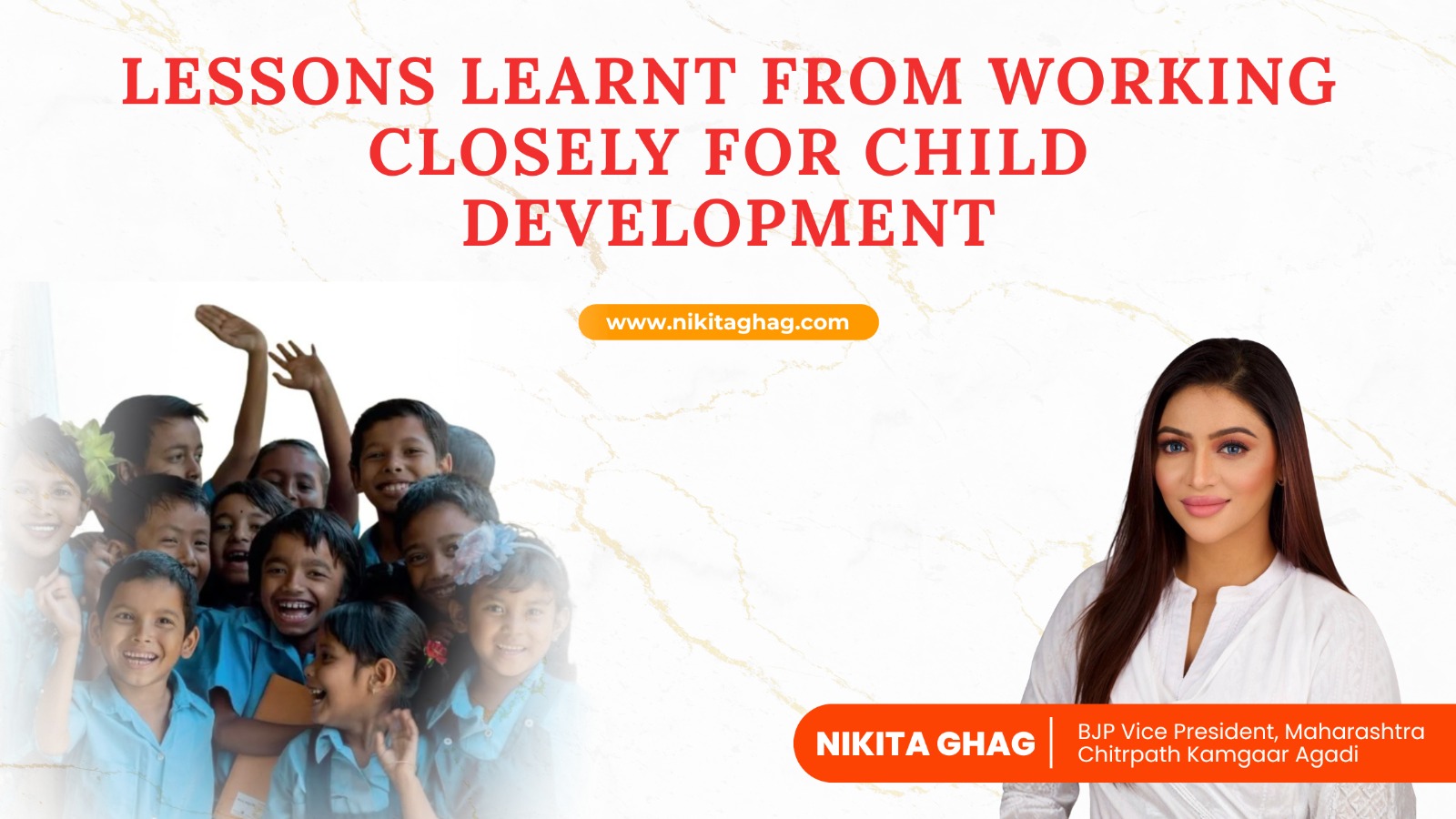
Working closely in the field of child development has taught me that every child has a different story, a different pace, and a different way of understanding the world. Before spending time with children, parents, therapists, and educators, it is easy to think that development follows one fixed pattern. But the more I observed, listened, and learned, the more I understood one simple truth — child development is not about comparison, it is about connection, patience, and the right support at the right time.
Every child communicates differently. Some speak early, some take time. Some are highly active, while some need more encouragement to participate. Some children express themselves through words, while others express through actions, emotions, movement, or silence.
Through this journey, I learnt that child development is not only about milestones. It is about helping a child feel safe, understood, confident, and capable. It is also about guiding parents to see progress in small but meaningful steps.
What Child Development Really Means to Me
Child development is the overall growth of a child across different areas such as speech, movement, learning, emotions, behaviour, social interaction, and daily life skills. But from my point of view, it is much more than a checklist.
It is about understanding how a child thinks, feels, responds, explores, and learns from the world around them.
A child may need support with communication, attention, sitting tolerance, emotional regulation, sensory needs, motor skills, social skills, or school readiness. Sometimes, these concerns are visible early. Sometimes, parents notice them only when the child starts school or struggles with routine activities.
What I have learnt is that early observation matters. When we notice signs early and provide the right guidance, children get a better chance to grow with confidence.
Lesson 1: Every Child Grows at Their Own Pace
One of the biggest lessons I have learnt is that no two children develop in exactly the same way.
Some children may start speaking early but struggle with social interaction. Some may be good at puzzles but find it difficult to follow instructions. Some may be physically active but emotionally sensitive. Some may understand everything but take time to express themselves.
This taught me not to judge a child only by age or comparison. Development has patterns, but every child has their own rhythm.
As adults, we often ask, “Why is my child not doing what other children are doing?” But the better question is, “What does my child need right now to move one step forward?”
That shift in perspective makes a huge difference.
Lesson 2: Parents Need Support Too
Working closely in child development made me realise that the journey is not only about the child. It is also about the parent.
Many parents carry silent worries. They wonder if they are doing enough. They feel confused when relatives compare their child with others. They may feel guilty, stressed, or overwhelmed when they do not understand their child’s behaviour.
I have learnt that parents do not need judgment. They need clarity, reassurance, and practical guidance.
When parents understand why a child behaves a certain way, they become more patient. When they learn simple activities to do at home, they feel more involved. When they see small progress, they gain hope.
A supported parent can support a child better.
Lesson 3: Small Progress Is Still Progress
In child development, progress does not always look big or dramatic. Sometimes, progress is a child making eye contact for a few seconds. Sometimes, it is sitting for one extra minute. Sometimes, it is using one new word, trying a new food, following a simple instruction, or playing beside another child.
Earlier, people may overlook these small moments. But I have learnt that these small steps are powerful.
Every new response, every little attempt, every improved habit shows that the child is learning. The key is consistency.
Child development is built through repeated efforts, not overnight changes.
Lesson 4: Behaviour Is Communication
One of the most important things I learnt is that children do not always express their needs through words. Sometimes, behaviour becomes their language.
A child may cry, run away, shout, avoid tasks, throw things, or refuse instructions. Instead of immediately labelling the child as stubborn or naughty, we need to ask:
What is the child trying to communicate?
Maybe the task is too difficult. Maybe the child is overwhelmed. Maybe there is sensory discomfort. Maybe the child does not understand the instruction. Maybe the child wants attention but does not know how to ask for it.
When we look at behaviour with curiosity instead of anger, we understand the child better.
This lesson changed the way I look at children completely.
Lesson 5: Early Intervention Can Make a Big Difference
Another important lesson I learnt is the value of early intervention.
When developmental delays, speech concerns, sensory issues, learning difficulties, or behavioural challenges are addressed early, children get the support they need before the gap becomes bigger.
Early intervention may include speech therapy, occupational therapy, behavioural support, special education, sensory integration, parent counselling, or school readiness activities depending on the child’s needs.
The goal is not to pressure the child. The goal is to help the child build skills in a structured, gentle, and consistent way.
Early support gives children confidence. It also gives parents direction.
Lesson 6: Play Is Not Just Play
Before understanding child development closely, many people think play is only for fun. But I learnt that play is one of the most powerful ways children learn.
Through play, children develop language, problem-solving skills, imagination, emotional expression, social interaction, motor coordination, and attention.
A simple activity like stacking blocks can teach balance, patience, hand-eye coordination, and problem-solving. Pretend play can improve communication and imagination. Group play can teach sharing, turn-taking, and emotional control.
Play is a child’s natural classroom.
That is why guided play, meaningful activities, and structured routines are so important in child development.
Lesson 7: Consistency Works Better Than Pressure
One thing I have seen repeatedly is that pressure does not help children grow faster. In fact, pressure can make children anxious, resistant, or disconnected.
Consistency works better.
A calm routine, repeated practice, positive reinforcement, and patient guidance help children feel secure. When children know what to expect, they are more likely to participate and learn.
For example, a child may not learn a new skill in one session. But when the same skill is practised at home, in therapy, and in daily routine, progress becomes stronger.
Development needs time. Children need encouragement, not force.
Lesson 8: Teamwork Matters in Child Development
Child development works best when parents, therapists, teachers, and caregivers work together.
A therapist may guide skill-building. A teacher may observe classroom behaviour. Parents may support daily routines at home. Caregivers may help with consistency.
When everyone understands the child’s needs and follows a common approach, the child benefits more.
I learnt that child development is never a one-person journey. It is a team effort built around the child.
Lesson 9: Confidence Is as Important as Skills
While skills are important, confidence is equally important.
A child who feels constantly corrected may stop trying. A child who feels appreciated may attempt more. When we celebrate effort, not just results, children develop confidence.
Sometimes, a child needs to hear:
“You tried well.”
“It’s okay, let’s try again.”
“I am proud of you.”
These simple words can help a child feel safe enough to learn.
Confidence gives children the courage to explore, speak, move, interact, and participate.
Lesson 10: Every Child Deserves to Be Understood
The most meaningful lesson I have learnt is that every child deserves to be understood before being corrected.
Behind every delay, behaviour, hesitation, or struggle, there is a reason. When we take time to understand that reason, we respond better.
Children do not need adults who compare them constantly. They need adults who observe them carefully, guide them patiently, and believe in their potential.
Child development is not about making every child the same. It is about helping every child become the best version of themselves.
Conclusion
Working closely in child development has changed the way I see children, parents, learning, behaviour, and progress. It has taught me patience. It has taught me empathy. Most importantly, it has taught me that every small step matters.
Children grow beautifully when they are supported with love, structure, understanding, and consistency. Parents feel stronger when they receive the right guidance. And progress becomes possible when we stop comparing and start connecting.
From my point of view, child development is not just professional work. It is a journey of trust, observation, learning, and hope.
Every child has potential. Sometimes, they just need someone to understand their world and walk with them at their pace.