
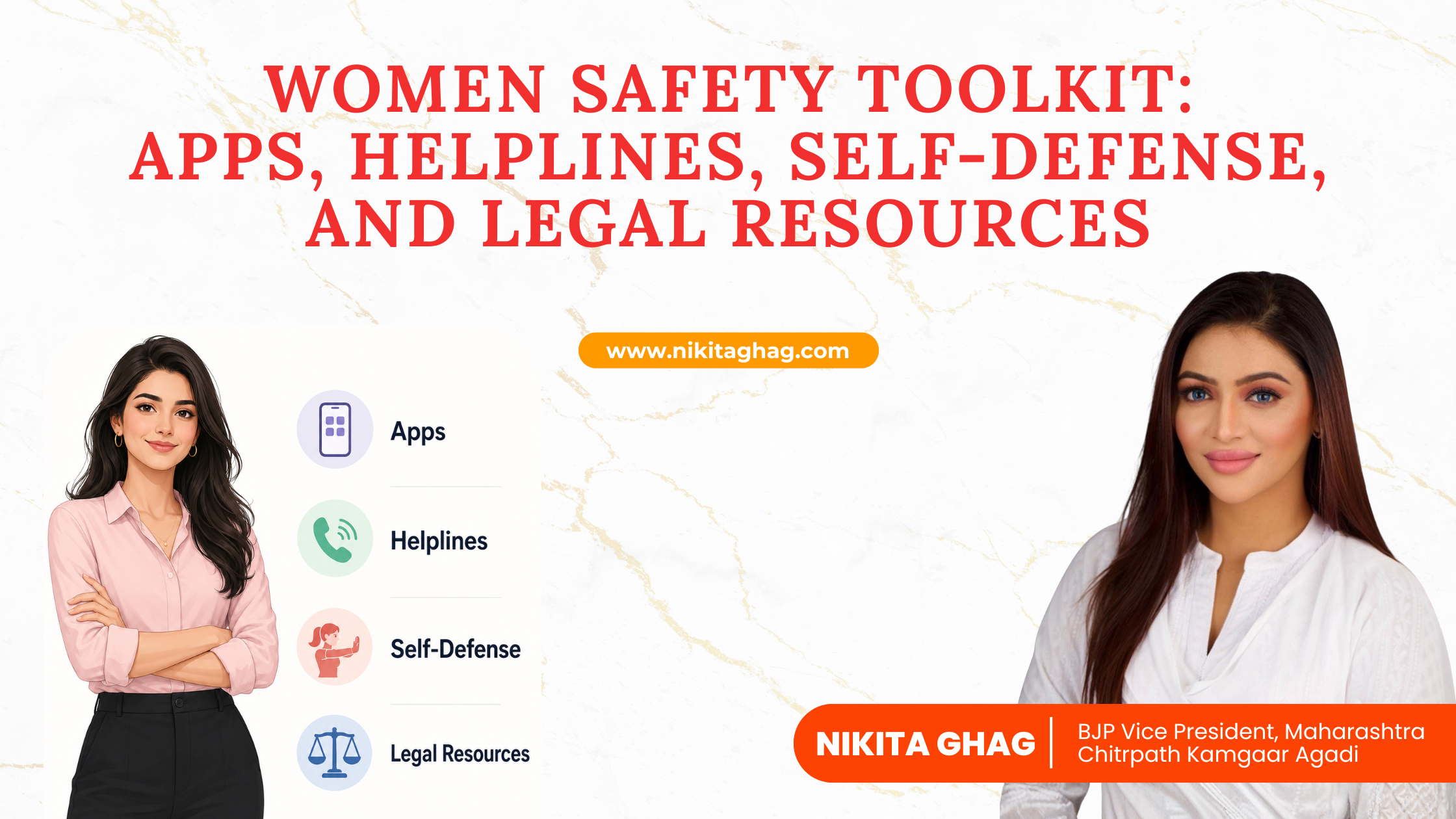
Women’s safety is not just a personal concern; it is a social responsibility. Every woman deserves to move freely, work confidently, travel safely, and live without fear. But safety also begins with awareness. Knowing the right apps, emergency numbers, self-defense habits, and legal support systems can make a real difference in a difficult moment.
This Women Safety Toolkit by Nikita Ghag is created as a simple, practical guide for women, girls, families, students, working professionals, and communities. The goal is not to create fear, but to build preparedness, confidence, and quick access to help.
Why Every Woman Should Have a Safety Toolkit
A safety toolkit is not only about carrying pepper spray or downloading an app. It is about being prepared mentally, digitally, legally, and physically. In today’s world, women face different types of safety concerns, from street harassment and workplace misconduct to domestic violence, cyberstalking, online blackmail, and unsafe travel situations.
Being prepared helps women respond faster. It also helps families and friends support them better during emergencies.
Important Emergency Helplines for Women in India
Every woman should save these numbers on her phone and also share them with trusted family members.
112 – National Emergency Number
Dial 112 for emergency assistance related to police, fire, medical support, and other urgent safety situations. The Government of India’s Emergency Response Support System also allows SOS activation through the 112 India mobile app.
181 – Women Helpline
The Women Helpline 181 is designed to provide emergency and non-emergency support to women in distress, connecting them with police, One Stop Centres, hospitals, legal services, and other support systems.
1930 – Cyber Crime Helpline
For cyber fraud, online harassment, blackmail, fake profiles, image misuse, or digital threats, women can use the National Cyber Crime Reporting Portal and helpline 1930.
1098 – Child Helpline
For girls and children in distress, 1098 is an important child helpline number that can be used to seek urgent support and protection.
Safety Apps Every Woman Should Know
Technology can be a powerful safety support when used correctly. Women should not wait for an emergency to download safety apps. Install them, set them up, and test the features in advance.
1. 112 India App
The 112 India app allows users to activate an SOS alert and connect with emergency response services. It also includes safety features that can help women and children reach emergency support quickly.
2. Mission Shakti Mobile App
The Mission Shakti platform includes useful features such as nearby One Stop Centre search, contact directory, appointment booking, women helpline access, important helplines, multilingual support, and public insights.
3. Location Sharing Apps
Women can use trusted location-sharing options through WhatsApp live location, Google Maps location sharing, or phone-based emergency contact features. These should be shared only with trusted people such as family members, close friends, or colleagues.
4. Cyber Safety Tools
Use two-factor authentication, strong passwords, privacy settings, and device locks. Women should avoid sharing OTPs, personal documents, private photos, or location details with unknown people. In case of online abuse, take screenshots, save links, and report immediately through official cybercrime channels.
Self-Defense: Confidence Begins With Awareness
Self-defense does not mean fighting every situation physically. The first rule of self-defense is awareness. Women should learn how to identify unsafe surroundings, maintain distance, use their voice firmly, and escape when needed.
A basic self-defense mindset includes staying alert in isolated areas, parking lots, staircases, elevators, and late-night travel situations. Avoid walking while fully distracted by earphones or phone calls. Trust your instinct when something feels wrong. Keep emergency contacts on speed dial. Learn basic moves like wrist release, palm strike, elbow strike, knee strike, and how to create distance from an attacker.
Self-defense training can also improve confidence, body awareness, and decision-making. Schools, colleges, housing societies, offices, and community groups should organize regular self-defense workshops for women and girls.
Legal Resources Every Woman Should Know
Women must know that the law provides protection in many situations. Legal awareness helps women act quickly and confidently.
Domestic Violence Support
The Protection of Women from Domestic Violence Act, 2005 provides a legal framework for women facing domestic violence. Women facing abuse at home should reach out to police, women helpline 181, One Stop Centres, protection officers, or legal aid services.
Workplace Sexual Harassment
The Sexual Harassment of Women at Workplace Act, 2013 provides protection against sexual harassment at the workplace and sets a framework for complaint redressal. It helps women raise complaints and seek action against workplace misconduct.
One Stop Centres
One Stop Centres provide integrated support under one roof to women affected by violence, both in private and public spaces. Services may include medical aid, legal aid and advice, temporary shelter, police assistance, and psycho-social counselling.
National Commission for Women
The National Commission for Women has an online complaint registration and monitoring system. Its Complaint and Investigation Cell handles complaints related to domestic violence, harassment, dowry, torture, refusal to register FIR, cruelty, gender discrimination, and sexual harassment at the workplace.
What To Do During an Emergency
In an emergency, every second matters. Try to stay calm and take quick action.
Call 112 if there is immediate danger. Use the SOS or panic feature on your phone if calling is not possible. Move toward a crowded or well-lit area. Shout clearly for help instead of staying silent. Share your live location with a trusted person. Do not delete threatening messages, call records, photos, or evidence. After reaching safety, file a complaint with the police or relevant authority.
What Families and Communities Can Do
Women’s safety cannot depend only on women. Families, schools, offices, housing societies, and communities must create safer spaces.
Parents should teach daughters and sons about consent, respect, boundaries, and emergency response. Workplaces should have strong anti-harassment policies and Internal Committees. Housing societies should improve lighting, CCTV coverage, visitor entry systems, and emergency response planning. Schools and colleges should conduct cyber safety and self-defense sessions regularly.
Nikita Ghag’s Message: Safety Is Empowerment
According to Nikita Ghag, women do not need fear; they need freedom, awareness, and support. A safer society is built when women are heard, believed, protected, and empowered.
This Women Safety Toolkit is a reminder that every woman should know her rights, save emergency numbers, use technology wisely, learn basic self-defense, and speak up against violence or harassment. Safety is not a privilege. It is every woman’s right.
When women feel safe, families become stronger, workplaces become healthier, and society moves forward with dignity.
Conclusion
Women’s safety begins with awareness and grows stronger with action. Save the helpline numbers. Download safety apps. Learn self-defense basics. Understand your legal rights. Support other women when they speak up.
A prepared woman is a powerful woman. And a society that protects women is a society that truly progresses.