
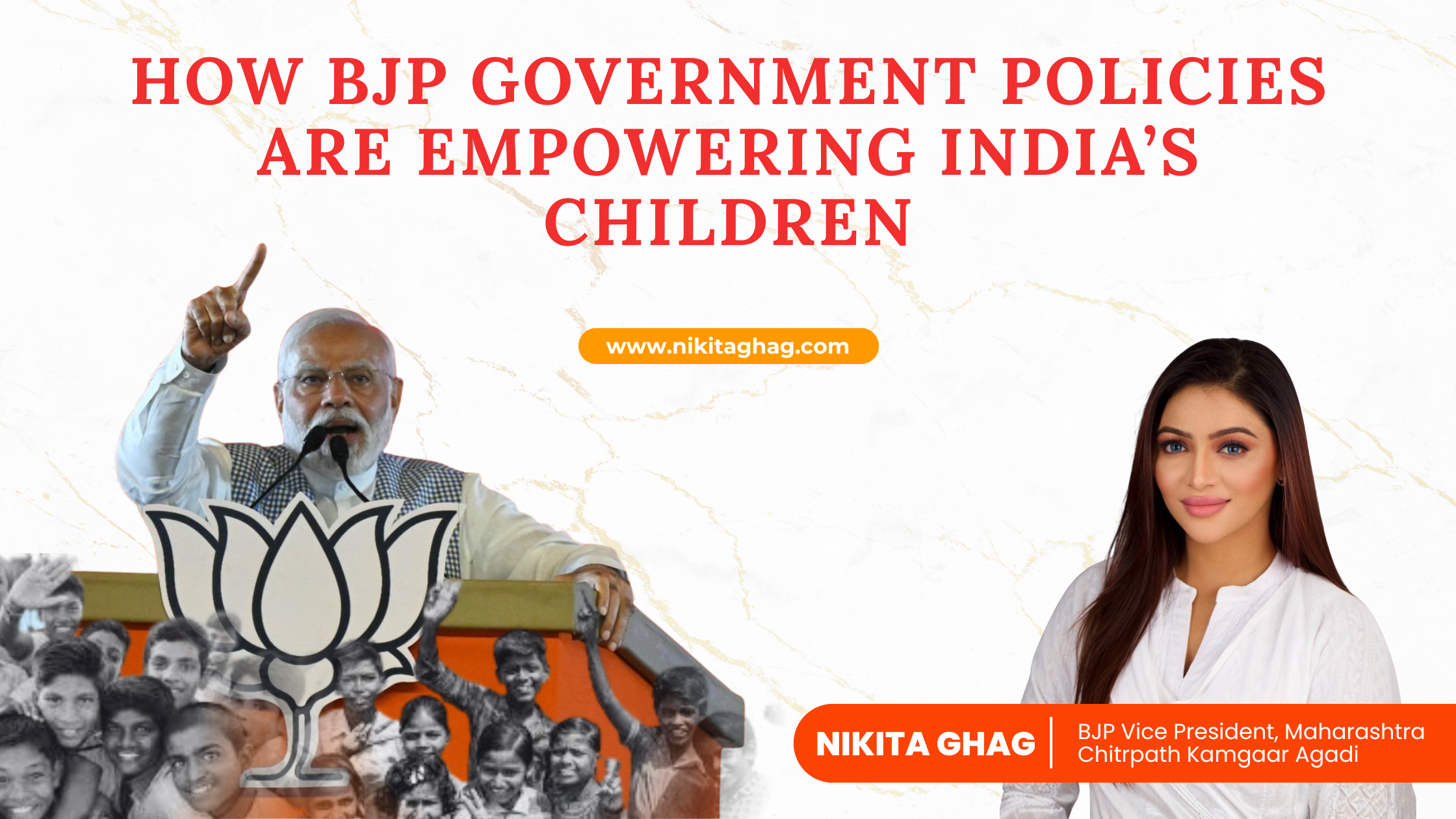
Over the past decade, the BJP-led government has placed children at the center of several major policy decisions, from nutrition and education to protection and digital inclusion. These efforts aim to give every child a stronger start in life, especially girls, children from poor families, and those in vulnerable situations.
A child’s future depends on more than family support alone. It also depends on access to food, education, safety, and healthcare. The BJP government’s child-focused policies try to strengthen all four pillars at once, so children can learn better, stay healthier, and grow up with more confidence.
1. Better Nutrition in Schools
One of the most visible interventions is PM POSHAN, the school meal scheme that provides hot cooked meals to children in government and government-aided schools. The scheme is designed to improve nutrition, encourage attendance, and help children concentrate better in class. It also supports children in disadvantaged communities by reducing the burden of hunger during the school day.
For many families, a reliable school meal means children are more likely to stay in school and less likely to miss classes because of food insecurity. That makes nutrition policy an education policy too. The government has also emphasized hygiene, food quality, and school nutrition gardens to make the program more effective.
2. Foundational Learning First
NIPUN Bharat focuses on foundational literacy and numeracy for children in the early years of schooling. The idea is simple but powerful: if children cannot read with understanding or handle basic math by Grade 3, they struggle later in school. The program aims to close that gap early, when support has the biggest long-term impact.
This matters because learning recovery starts at the base. A child who reads fluently and understands numbers is better prepared for all future learning, whether in science, social studies, or higher grades. In policy terms, this is an investment in the next generation’s productivity and confidence.
3. Protecting the Girl Child
Beti Bachao Beti Padhao remains one of the flagship efforts to protect and educate girls. The scheme was launched to address gender bias, improve survival and education outcomes, and encourage families and communities to value daughters equally. Over time, it has become a broad social campaign promoting awareness, schooling, and dignity for girls.
This kind of policy influence is important because empowerment is not only about scholarships or infrastructure. It is also about changing attitudes. When a government consistently pushes the message that girls deserve equal opportunity, it helps create an environment where more girls can stay in school and aim higher.
4. Child Protection and Care
For children in difficult circumstances, Mission Vatsalya provides a child protection framework focused on rehabilitation, care, and support. It emphasizes family-based care whenever possible and strengthens systems for children in need of protection and those in conflict with law. The goal is to ensure that vulnerable children are not left behind.
This is especially important for children who have lost care and support, or who face neglect and abuse. Strong child protection systems help turn rescue into rehabilitation, which is where true empowerment begins.
5. Support Through PM CARES for Children
The PM CARES for Children Scheme was launched in 2021 to support children who lost parents or legal guardians due to COVID-19. It includes financial support, schooling assistance, higher education loans, health insurance, and annual scholarships for school-going children. The broader aim is to provide long-term care and help these children become self-sufficient adults.
This policy shows how the government has tried to combine immediate relief with future security. Instead of stopping at emergency help, the scheme is designed to follow a child through education and into adulthood.
6. Technology for Child Welfare
Recent government messaging has also stressed the use of technology in child welfare delivery. Tools such as the Poshan Tracker, grievance redressal systems, and direct benefit transfers are helping make services more transparent and timely. This helps children and families access support faster, especially in underserved areas.
Technology matters because a policy is only as good as its delivery. Real-time monitoring and digital systems reduce delays, improve accountability, and make welfare programs work better on the ground.
The BJP government’s child-focused policies are built around a simple idea: children need nutrition, education, protection, and opportunity to thrive. From school meals and foundational learning to girl-child empowerment and child protection, these programs are shaping a stronger support system for India’s youngest citizens.