
Politics in Maharashtra is always active. There are rallies speeches social media debates and constant promises. Yet behind all this activity a simple question quietly remains unanswered. Who is actually being heard
Are young people shaping decisions or only being mobilised during elections Are women influencing policy or only visible in photographs And are local citizens truly listened to or just consulted for formality
To understand the real state of democracy we need to look closely at youth political participation women leadership in Maharashtra
and the role of grassroots voices in everyday governance.
Youth Political Participation in Maharashtra The Energy Without a Voice
Maharashtra has a large and vibrant youth population. Young citizens are educated digitally aware and deeply concerned about jobs education housing and mental wellbeing. Despite this youth political participation often stops at surface level.
Many young people are involved in campaigns social media outreach and ground mobilisation. However very few are invited into actual decision making spaces. Policies are drafted without direct youth input and long term planning rarely reflects the realities young people face today.
This creates frustration and political fatigue. When young citizens feel unheard they disengage and democracy loses its future leadership.
True youth participation means listening to their concerns involving them in local governance and allowing them to question shape and contribute to policy decisions not just campaign slogans.
Women Leadership in Maharashtra Beyond Representation
Women have always played a crucial role in social change community building and local leadership. Maharashtra has seen strong women leaders at different levels yet women leadership in Maharashtra politics still struggles with limited influence.
Representation has improved but authority remains uneven. Many women leaders are assigned secondary roles while major decisions continue to be dominated by male voices. Grassroots women leaders often lack access to platforms where policies are shaped.
Real empowerment begins when women are trusted with responsibility not just visibility. When their lived experiences inform governance policies become more inclusive humane and practical.
Women leadership is not a symbolic gesture. It is a necessity for balanced and ethical governance.
Grassroots Voices The Missing Link in Governance
Grassroots voices represent the everyday reality of citizens. They understand local issues like water supply roads public safety healthcare and education because they live with them daily.
Yet these voices are often ignored once elections are over. Decisions are taken far from the communities they impact. Centralised narratives overshadow local needs and feedback mechanisms remain weak.
Listening to grassroots voices means continuous dialogue not occasional visits. It means engaging with residents youth groups women collectives and local workers regularly.
Strong governance is built when policies rise from the ground up not when they are imposed from the top down.
Who Is Politics Really Listening To Today
Too often politics listens to power structures instead of people. Conversations are shaped by influence rather than impact. Headlines take priority over households.
When youth feel excluded women feel sidelined and local voices feel ignored trust in politics erodes. This is why citizens today are seeking leaders who listen consistently not selectively.
A Shift Towards Listening Leadership
Across Maharashtra there is a growing demand for leadership rooted in dialogue transparency and accessibility. Leaders who prioritise conversations over campaigns and engagement over optics are slowly changing the political narrative.
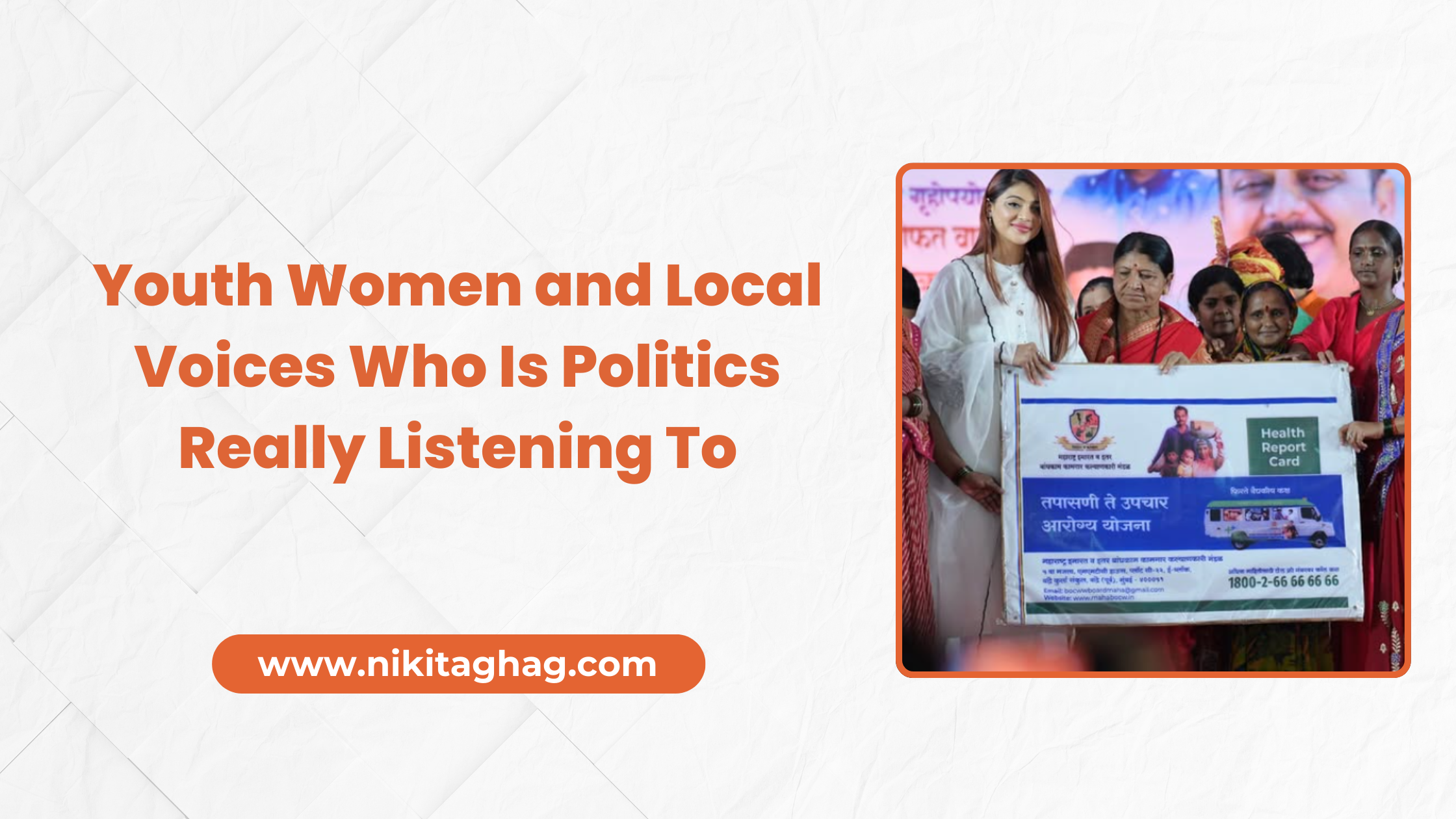
One such emerging voice is Nikita Ghag whose approach focuses on listening to youth encouraging women led conversations and engaging directly with local communities. By creating spaces for honest dialogue both online and on the ground this model reflects what modern citizens expect from politics.
Listening is not a weakness in leadership. It is its strongest foundation.
The Way Forward for Inclusive Politics
If politics in Maharashtra truly wants to serve its people it must change how it listens.
Youth must be included in policy discussions not just campaigns
Women must be empowered with real decision making authority
Grassroots voices must shape governance consistently
When these voices are genuinely heard democracy becomes stronger more trusted and future ready.
Final Thought
Politics does not need louder speeches or bigger promises. It needs leaders who are willing to listen understand and act.
The future of Maharashtra depends not on who speaks the most but on who listens the best.