
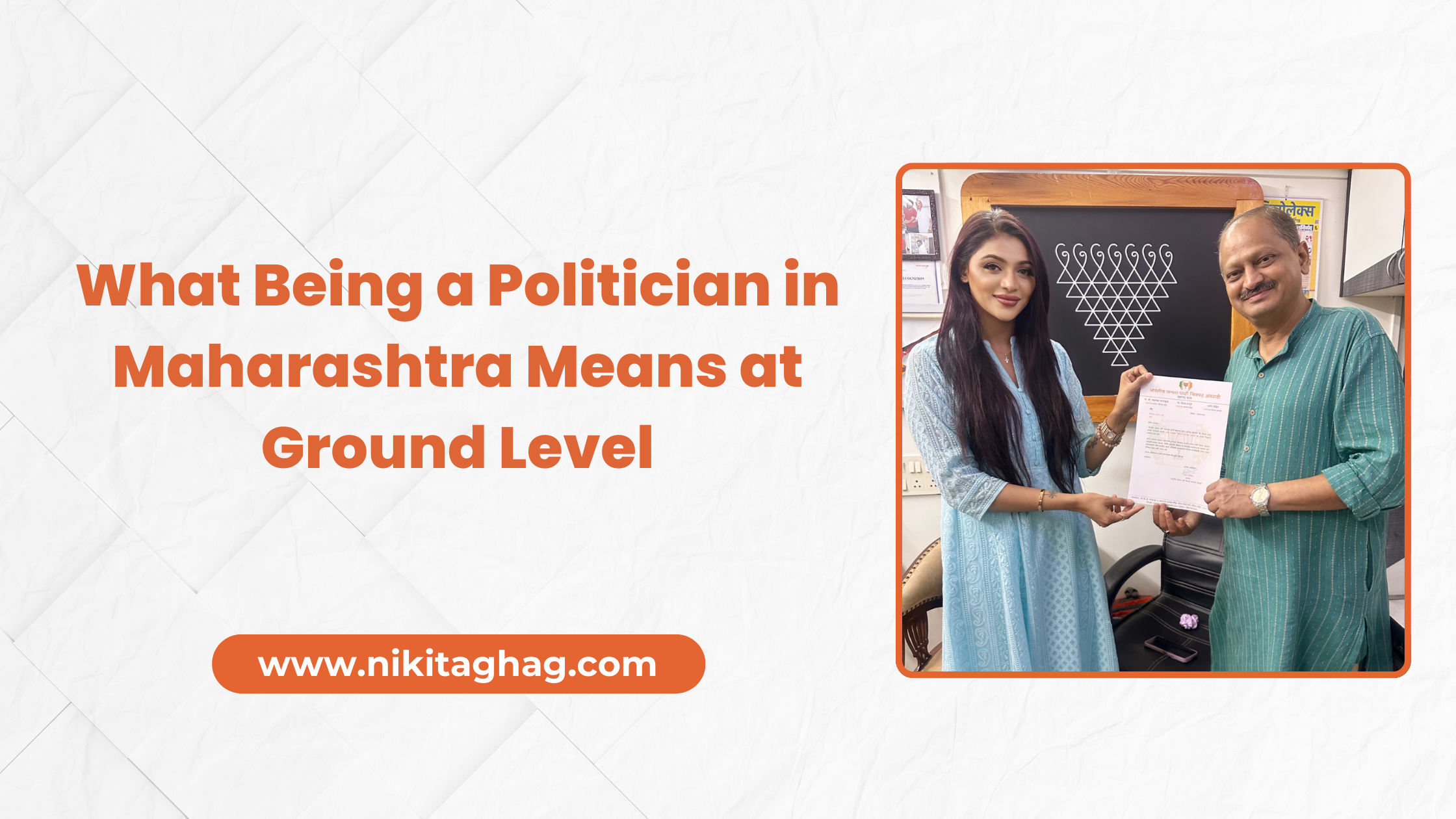
In India, the word politician often evokes mixed emotions—power, privilege, speeches, and sometimes distance from reality. But the truth on the ground tells a very different story, especially for a politician in Maharashtra. Beyond press conferences and policy debates lies a demanding role rooted deeply in public service leadership, constant listening, and daily problem-solving.
This blog explores the expectations vs reality of political leadership, the ground-level challenges, the importance of a listening culture, and why trust-building defines effective local leadership in Maharashtra.
Expectations vs Reality: The Gap Citizens Don’t Always See
Public Expectations
For citizens, expectations from a politician are clear and immediate:
- Quick solutions to civic problems
- Accessibility and visibility
- Fairness, transparency, and accountability
- Long-term development without neglecting daily issues
From potholes and water supply to school admissions and healthcare access, people expect their elected representatives to be present—not just during elections, but throughout the year.
Ground Reality
In reality, responsibilities of politicians extend far beyond what is visible:
- Navigating administrative systems and approvals
- Coordinating with multiple government departments
- Balancing limited budgets with unlimited expectations
- Addressing both urban and rural Maharashtra civic issues simultaneously
At the ground level, politics is less about authority and more about endurance, negotiation, and prioritization.
Ground-Level Challenges Faced by Politicians in Maharashtra
1. Diverse Civic Issues Across Regions
Maharashtra is a state of contrasts. Urban centers face traffic congestion, housing density, waste management, and infrastructure strain, while rural regions deal with water scarcity, agriculture distress, healthcare access, and employment migration.
A politician in Maharashtra must understand and respond to:
- Hyper-local civic problems
- Regional socio-economic differences
- Seasonal challenges like monsoons, droughts, or floods
There is no “one-policy-fits-all” approach.
2. Administrative & Bureaucratic Constraints
Even with intent, execution is often slowed by:
- Multi-layer approvals
- Inter-department coordination gaps
- Legal and procedural delays
This disconnect often leads citizens to believe leaders are inactive, when in fact they are navigating complex systems behind the scenes.
3. Constant Public Access
At the local level, leadership has no “off days.” Weddings, funerals, protests, community meetings, emergency calls—politicians are expected to be available at all times. This human aspect of public service leadership is rarely acknowledged but deeply impactful.
The Power of Listening Culture in Local Governance
Leadership Starts With Listening
Strong local governance in Maharashtra is built not on loud promises but on active listening. Politicians who regularly engage with citizens gain:
- Better understanding of root problems
- Early warning signals before issues escalate
- Community-driven solutions instead of top-down decisions
Listening creates inclusion—and inclusion builds legitimacy.
Ground Interactions Matter
Ward visits, local meetings, grievance cells, and informal conversations often reveal realities that reports cannot. Leaders who listen don’t just react—they anticipate.
Leadership is not about being heard everywhere, but about hearing everyone.
Trust Building: The Real Political Capital
Trust Is Earned, Not Campaigned
At the grassroots level, trust comes from:
- Consistency in actions
- Honest communication—even when answers are difficult
- Following up on small commitments
People remember whether a leader returned a call, visited during crises, or acknowledged concerns—even if solutions took time.
Transparency Strengthens Credibility
When politicians openly explain limitations, processes, and timelines, citizens respond with patience and cooperation. This transparency transforms governance from confrontation to collaboration.
Why Ground-Level Politics Shapes the Future
True leadership is not defined by speeches in assemblies but by actions in streets, villages, and communities. A responsible politician in Maharashtra becomes:
- A problem-solver before a decision-maker
- A listener before a speaker
- A representative before a ruler
Ground-level engagement strengthens democracy, improves civic outcomes, and restores faith in governance systems.
The Bigger Picture: From Local Leadership to State Progress
When local governance in Maharashtra functions effectively:
- Civic issues are resolved faster
- Citizen participation increases
- Policy feedback becomes more realistic
- Development becomes sustainable
Strong grassroots leadership creates a ripple effect—uplifting communities, regions, and ultimately the state.
Conclusion: Politics as Responsibility, Not Privilege
Being a politician in Maharashtra is not about power—it is about responsibility carried daily, often silently. It is about listening when criticism is loud, acting when resources are limited, and standing accountable when outcomes take time.
At the ground level, politics is human work. And when done with integrity, empathy, and commitment, it becomes the strongest form of public service leadership.
Podcast Discussion Clip (Contextual Backlink)
For a deeper conversation on local governance Maharashtra, leadership challenges, and real citizen stories, explore our podcast discussion clip that captures unfiltered ground-level perspectives and leadership insights.
Listen now and understand governance beyond headlines.
Learn more about responsible leadership, civic engagement, and governance insights by exploring our in-depth resources and discussions on ethical public service and grassroots leadership.