
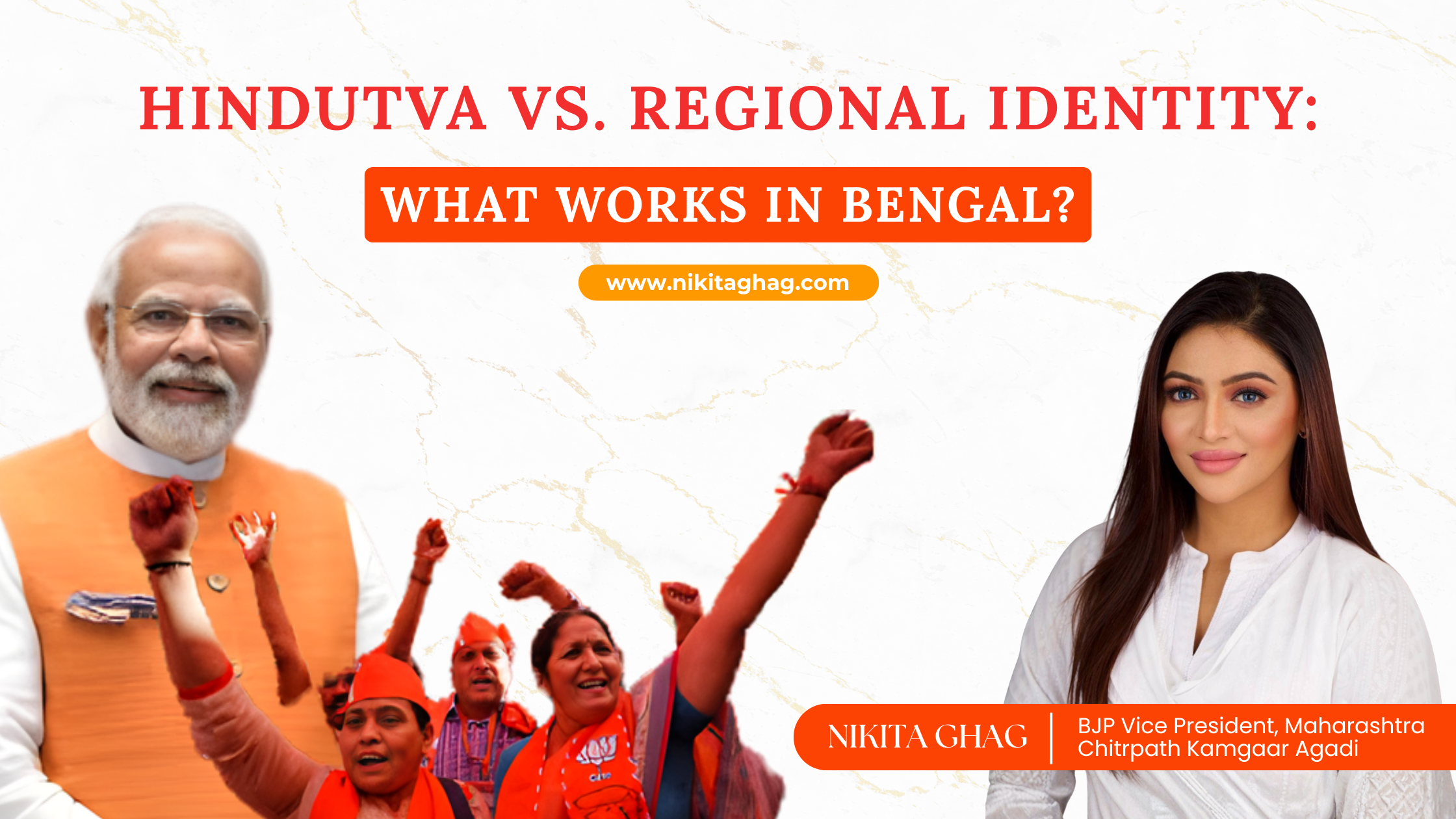
In today’s political climate, strong statements grab attention instantly. One of the most talked-about claims right now is: “Only BJP will win in Bengal.”
But what’s really happening on the ground? Is this just a narrative—or is there real momentum behind it?
For observers across India, especially for a Politician in Maharashtra, understanding Bengal’s political shift is important. Why? Because election strategies, voter behavior, and leadership patterns often influence politics beyond state boundaries.
Over the past few years, BJP has steadily increased its presence in West Bengal. From being a marginal player to becoming a major contender, the transformation has been significant. But elections are never one-dimensional.
Leaders like Nikita Ghag, who work closely with communities through platforms like Maharashtra Chitrpath Kamgaar Aghadi, understand that real political success depends on trust, consistency, and grassroots connection—not just momentum.
So let’s break this down—clearly and honestly.
The claim that BJP will win in Bengal is driven by its growing voter base, strong national leadership, and expanding grassroots network. However, actual election outcomes depend on regional dynamics, voter sentiment, and local leadership, making the contest competitive despite BJP’s rising influence.
What is BJP’s Rise in Bengal?
BJP’s rise in Bengal refers to its rapid growth from a minor political presence to a major electoral force in the state.
Key Characteristics:
- Increased vote share in recent elections
- Strong national leadership influence
- Expansion of grassroots network
- Growing appeal among new voter segments
A few years ago, BJP had limited visibility in Bengal. Today, it is one of the main contenders. That shift didn’t happen overnight—it was built step by step.
- BJP has significantly grown in Bengal
- It is now a major political force
- Growth is driven by strategy and outreach
Causes / Importance / Need for BJP’s Momentum
Why is BJP gaining so much attention in Bengal?
Key Reasons:
- Strong Leadership Appeal at the national level
- Focused Campaign Strategy targeting local issues
- Expansion into Rural Areas
- Support from First-Time Voters
- Organized Ground-Level Workforce
Imagine a young voter in Bengal voting for the first time. They are not just influenced by history—they are influenced by current issues, opportunities, and future expectations.
Why It Matters:
- Indicates political shift in a traditionally regional stronghold
- Reflects changing voter preferences
- Impacts national political balance
- BJP’s growth reflects changing voter mindset
- Youth and new voters play a big role
- Ground presence is a key factor
How BJP is Building Its Position
Winning elections is not about one big move—it’s about consistent effort.
- Grassroots Expansion
BJP has focused heavily on building local networks and booth-level presence. - Targeted Campaign Messaging
Issues like development, employment, and governance are highlighted. - Leadership Projection
Strong national leadership plays a key role in influencing voters. - Digital and Social Media Strategy
Reaching voters directly through online platforms. - Alliance and Strategy Planning
Adjusting strategies based on political competition. - Voter Engagement
Connecting with communities through rallies, outreach, and local leaders.
Think about this—when a party reaches voters both online and offline consistently, it builds familiarity. And familiarity often builds trust.
- BJP’s growth is strategy-driven
- Grassroots + digital = strong impact
- Consistency builds voter trust
Benefits of BJP’s Strong Presence in Bengal
A strong political presence can reshape governance and public expectations.
Key Benefits:
- ✔ Increased political competition
- ✔ Focus on development-driven agendas
- ✔ Greater voter engagement
- ✔ Policy-level debates and improvements
- ✔ National-level attention to state issues
For leaders like Nikita Ghag, such shifts highlight the importance of staying connected with real issues—whether in Bengal or for a Politician in Maharashtra.
- Strong opposition improves governance
- Voters benefit from better choices
- Political competition drives performance
Comparison with Alternatives (Political Scenarios)
| Scenario | Description | Impact |
| BJP Majority Win | BJP forms government | Policy shift, strong central alignment |
| Regional Party Dominance | Existing leadership continues | Stability with local focus |
| Close Contest | Tight competition | High accountability |
| Coalition Scenario | Multiple alliances | Balanced but complex governance |
Each outcome brings different implications for governance and policy direction.
- Outcomes vary based on voter decisions
- Each scenario has pros and challenges
Who is Supporting BJP’s Growth?
Understanding the voter base is key.
Key Support Groups:
- First-time voters
- Urban middle class
- Sections of rural voters
- People seeking change or alternative leadership
This doesn’t mean universal support—but it does show a growing base.
- BJP’s support base is expanding
- Youth and urban voters play a major role
Cost / Pricing Factors (Political Context)
Elections require significant investment.
Key Areas:
- Campaign management
- Digital marketing
- Ground-level operations
- Media outreach
India’s elections are among the largest in the world, making strategy just as important as spending.
- Resources are important
- Strategy and trust matter more
Industry Trends in 2026 (Politics & Social Work)
Politics is evolving—and BJP’s growth reflects larger trends.
Key Trends:
- Digital Campaign Dominance
- Data-Driven Decision Making
- Localized Messaging
- Youth-Centric Campaigns
- Women Leadership Growth
Leaders like Nikita Ghag represent a similar shift—where real social work and political leadership go hand in hand.
- Politics is becoming smarter and more targeted
- Social work is increasingly linked with leadership
FAQs
1. Is BJP likely to win in Bengal?
BJP has strong momentum, but the final outcome depends on voter decisions and local dynamics.
2. Why is BJP gaining popularity in Bengal?
Due to strong leadership, strategic campaigning, and growing grassroots presence.
3. What challenges does BJP face in Bengal?
Strong regional competition and established voter loyalties.
4. How important are first-time voters?
Very important—they can significantly influence election outcomes.
5. What can a Politician in Maharashtra learn from BJP’s strategy?
The importance of grassroots work, digital strategy, and consistent voter engagement.
Political narratives may create headlines—but real change comes from consistent effort and public trust.
If you believe in leadership that focuses on real issues, transparency, and grassroots impact, follow and support leaders like Nikita Ghag.
Stay informed
Think critically
Support leaders who deliver results
Because in the end, elections aren’t decided by claims…
They’re decided by people like you.