
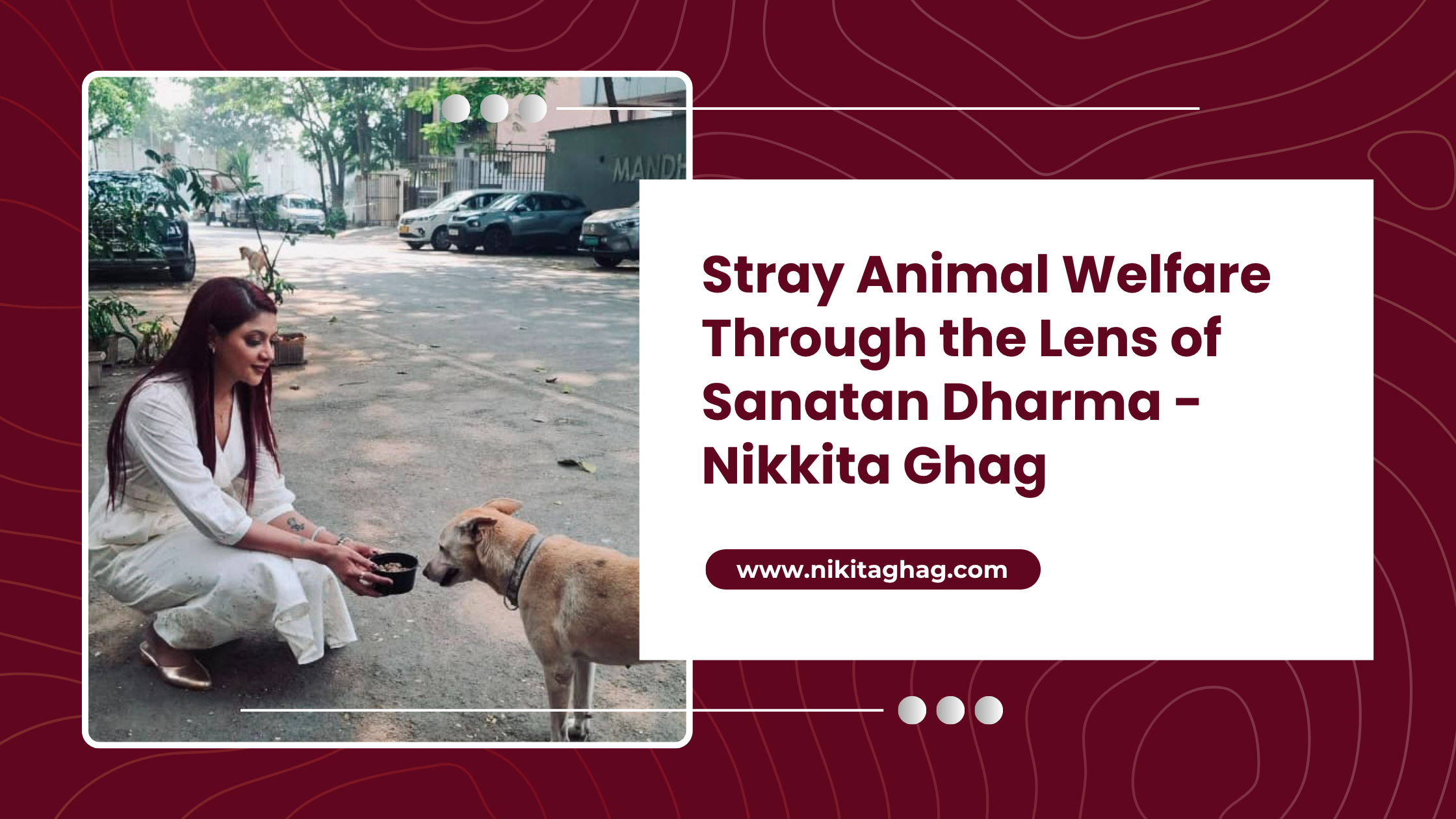
Animals have always had a special place in Indian culture. They are present in our homes, our streets, our stories, our festivals, and our spiritual beliefs. For generations, Indian families have fed birds, cared for cows, offered food to dogs, and treated nature as sacred.
This connection is not accidental. It comes from a deeper belief that all living beings deserve respect.
For Nikkita Ghag, Founder of DAWA India, an NGO dedicated to animal welfare, caring for stray animals is not just a social cause. It is a way of living the values of Sanatan Dharma.
Through DAWA India, Nikkita Ghag continues to work for animals who are often ignored, misunderstood, injured, abandoned, or left to survive on their own. Her mission is rooted in compassion and responsibility. It reminds us that animal welfare is not separate from our culture. It is deeply connected to who we are as a society.
Sanatan Dharma teaches us to respect life in every form. It asks us to be kind, to avoid cruelty, and to help those who cannot ask for help. When we care for stray animals, we are not only protecting them. We are also keeping alive the values of ahimsa, seva, and compassion.
The Connection Between Sanatan Dharma and Animal Welfare
Sanatan Dharma has always encouraged harmony between humans, animals, and nature. It does not see life as something that belongs only to human beings. Instead, it teaches that every living being has a place in this world.
One of the most important values in Sanatan Dharma is Ahimsa, which means non-violence. But ahimsa is not only about not hurting someone physically. It also means choosing kindness over cruelty, care over neglect, and understanding over fear.
This idea becomes very important when we talk about stray animals.
A hungry dog near a street corner, an injured cat under a parked vehicle, a thirsty bird in summer, or an abandoned animal outside a building may not be able to speak, but they do feel pain, fear, hunger, and loneliness.
Our response to them says a lot about us.
Do we look away, or do we help?
Do we complain, or do we try to understand?
Do we see them as a problem, or do we see them as living beings who need care?
Sanatan Dharma encourages us to choose compassion.
DAWA India: A Mission for the Voiceless
As the Founder of DAWA India, Nikkita Ghag has turned her love for animals into meaningful action. DAWA India works with the belief that animals deserve dignity, safety, food, medical support, and kindness.
The purpose of animal welfare is not limited to feeding stray animals. Feeding is important, but true welfare goes beyond that. It also includes awareness, medical care, sterilization support, vaccination, adoption, rescue efforts, and educating people about peaceful coexistence.
Many stray animals suffer because of human actions. Some are abandoned by owners. Some are born on the streets because sterilization is not done on time. Some are injured in road accidents. Some survive on garbage because they do not have access to clean food. Some face cruelty simply because people fear or misunderstand them.
This is why DAWA India’s work is important. It reminds people that the answer is not hatred or violence. The answer is awareness, responsibility, and humane action.
For Nikkita Ghag, animal welfare is not a temporary act of kindness. It is a long-term commitment to building a more compassionate society.
Stray Animals Are Not Outsiders
In almost every Indian neighbourhood, stray animals are part of daily life. Dogs sleep near shops, cats move around buildings, cows walk through markets, and birds gather near homes and temples.
Many of these animals have lived in the same areas for years. They recognize people, follow routines, protect their spaces, and quietly share our surroundings.
Still, they are often treated as if they do not belong anywhere.
The word “stray” itself can create distance. It makes animals sound unwanted. But the truth is that these animals are part of our shared environment. They exist around us because of the way our cities, waste systems, housing areas, and communities function.
If we look at them through the lens of Sanatan Dharma, our perspective changes. We begin to see them not as a nuisance, but as living beings who also deserve safety and respect.
A society that values dharma cannot ignore suffering. Helping a hungry animal, giving water during summer, supporting a rescue, or stopping cruelty are all simple but powerful ways of practicing compassion.
Ahimsa Must Be Practiced, Not Just Spoken About
It is easy to speak about kindness. It is harder, but far more meaningful, to practice it every day.
Ahimsa becomes real when we choose not to harm animals. But it becomes even stronger when we actively protect them.
Small actions can make a big difference. Keeping a clean bowl of water outside your home during summer can save a life. Feeding animals in a safe and responsible place can prevent hunger. Helping with vaccination and sterilization can reduce suffering and support healthier communities.
If you see an injured animal, calling a local rescuer or veterinarian can make all the difference. If you witness cruelty, reporting it can protect an innocent life. If you are planning to bring a pet home, adopting an Indie can give a stray animal the love and security it deserves.
These acts may look small from the outside, but for an animal in need, they can mean everything.
This is where spirituality becomes action. Compassion should not remain only in words, prayers, or thoughts. It should reflect in how we treat the voiceless beings around us.
Seva for Animals Is Also Seva for Society
In Sanatan Dharma, Seva means selfless service. It is service done without expecting anything in return.
Caring for animals is one of the purest forms of seva. Animals cannot thank us in words. They cannot ask for justice. They cannot explain their pain. Yet, they continue to trust humans, even after facing neglect or cruelty.
When we help them, we serve life itself.
Animal welfare also helps society. A healthy, vaccinated, and sterilized stray animal population is better for both animals and humans. Responsible feeding reduces conflict. Sterilization helps control population growth in a humane way. Vaccination helps prevent disease. Awareness reduces fear and cruelty.
This is why stray animal welfare should not be seen only as an emotional issue. It is also a community responsibility.
When people learn to coexist with animals peacefully, society becomes safer, kinder, and more balanced.
Changing the Mindset Around Indian Stray Dogs
One of the biggest changes needed in animal welfare is the way people see Indian stray dogs, often called Indies.
Indies are intelligent, loyal, strong, loving, and naturally suited to the Indian climate. Yet, many people still choose foreign breeds while ignoring dogs who are already waiting for homes on the streets or in shelters.
Adoption can change a stray animal’s entire life.
When someone adopts an Indie, they are not just bringing home a pet. They are giving a homeless animal a second chance. They are also taking a stand against abandonment and unethical breeding.
Nikkita Ghag’s work through DAWA India encourages people to look at stray animals with empathy. Not every barking dog is dangerous. Not every street animal is aggressive. Many are simply scared, hungry, protective, or in need of care.
Understanding can reduce fear. Awareness can reduce cruelty. Compassion can create change.
Sanatan Dharma Teaches Harmony With Nature
Indian culture has always recognized the importance of animals. Dogs, cows, birds, elephants, monkeys, snakes, and many other animals appear in our traditions, stories, and spiritual symbols.
This shows that Sanatan Dharma does not separate humans from nature. It places humans within nature, with a responsibility to protect and respect other forms of life.
Cruelty toward animals goes against this spirit. Neglect goes against this spirit. Indifference goes against this spirit.
Dharma is not only about rituals. It is also about how we behave when no one is watching. It is about whether we choose kindness when it is easier to ignore. It is about whether we protect those who are weaker, voiceless, and dependent on us.
When we care for animals, we live our values in the most honest way.
How Every Citizen Can Help
You do not need to run an NGO to make a difference. Every person can support stray animal welfare in simple ways.
You can keep water bowls outside your building, shop, or home. You can feed animals responsibly in clean and safe spots. You can support local rescuers, animal feeders, and NGOs. You can help with vaccination and sterilization drives. You can report animal cruelty. You can encourage adoption instead of buying pets.
Housing societies and communities can also play an important role. Instead of creating fear or conflict, they can work with feeders and animal welfare groups to manage stray animal care responsibly.
Children should also be taught kindness toward animals from a young age. A child who learns compassion early grows into an adult who respects life.
Change begins with small habits. And when many people practice those habits together, society becomes more humane.
Nikkita Ghag’s Vision: Compassion as a Way of Life
For Nikkita Ghag, animal welfare is not only activism. It is a way of life.
As the Founder of DAWA India, she believes that stray animals deserve more than sympathy. They deserve action, protection, and respect. Her work reflects the belief that compassion should not be selective. It should extend to every living being.
Sanatan Dharma teaches us to see life with respect. DAWA India carries that belief forward through animal welfare.
A bowl of food can be seva.
A rescue can be dharma.
A vaccination drive can be compassion.
An adoption can change a life.
A kind heart can create a better world.
Conclusion
Stray animal welfare is not just about animals. It is about humanity.
It is about the kind of society we want to create. A society that ignores suffering becomes less sensitive over time. But a society that protects the voiceless becomes stronger, kinder, and more connected to its values.
Through the lens of Sanatan Dharma, caring for stray animals becomes more than a good deed. It becomes a responsibility. It reflects ahimsa, seva, compassion, and respect for all life.
Through DAWA India, Nikkita Ghag continues to spread this message with purpose and dedication.
Every animal deserves dignity. Every life deserves care. And every act of kindness brings us closer to the true meaning of dharma.
When we protect the voiceless, we protect the soul of humanity.