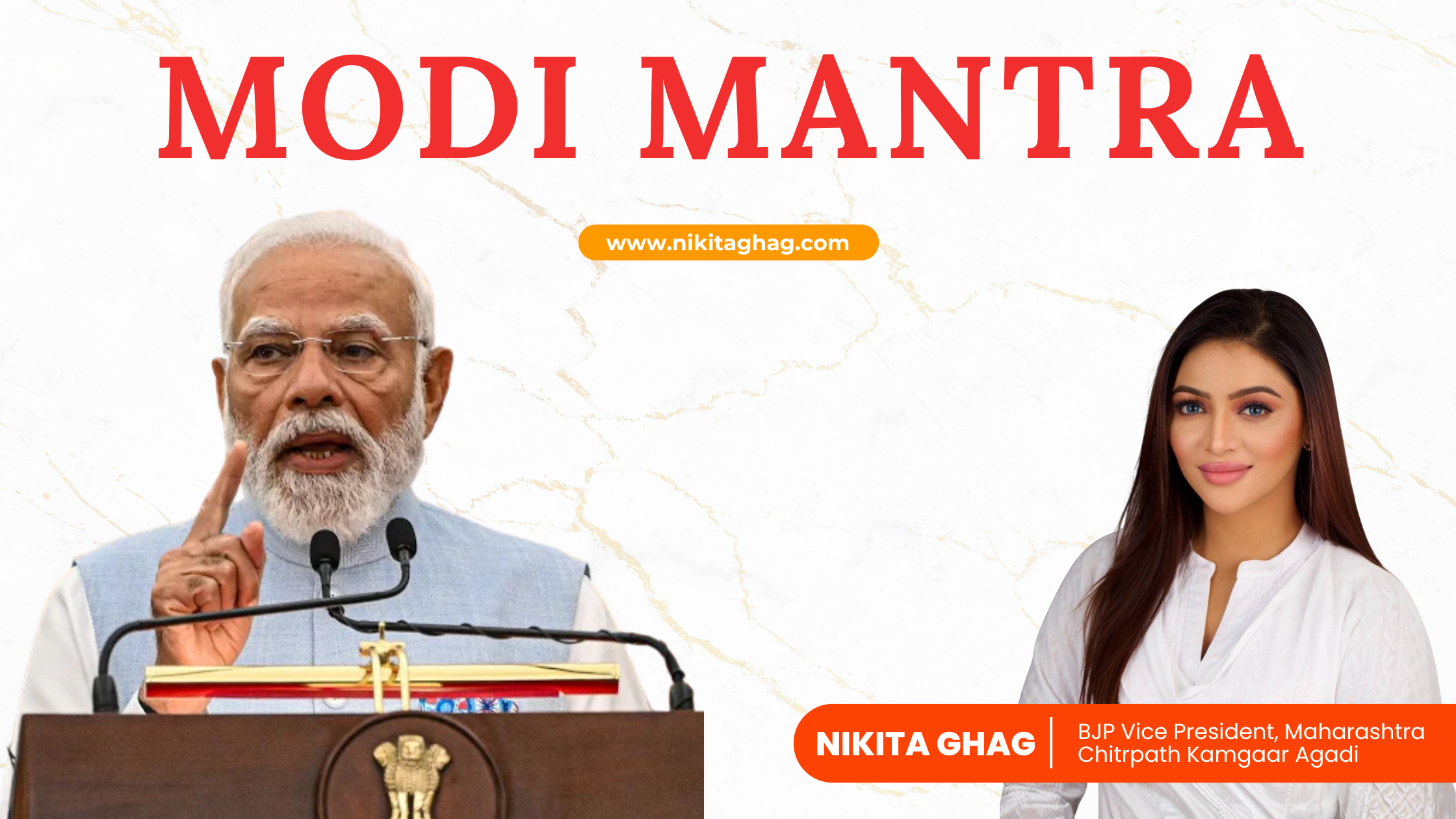
Governance in India has undergone a seismic shift over the last decade. Moving away from the “entitlement” based approach of the past, the Modi Good Governance Model—often referred to as the ModiMantra—is built on the bedrock of empowerment, last-mile delivery, and integrated development.
As of 2026, this model has matured into a sophisticated ecosystem where technology meets human aspiration. Here is a deep dive into the three pillars defining the “New India.”
1. Empowerment: Moving from Entitlement to Capability
The core philosophy of the Modi government is that true poverty alleviation comes from empowerment (Sashaktikaran) rather than mere handouts. This is achieved through a “saturation” approach, ensuring that every eligible citizen receives benefits without leakages.
Key Factors:
- Digital Public Infrastructure (DPI): India’s “JAM” trinity (Jan Dhan, Aadhaar, and Mobile) has revolutionized welfare. By early 2026, over 143 crore Aadhaar IDs have been issued, enabling Direct Benefit Transfers (DBT) that save billions of dollars by eliminating “ghost” beneficiaries.
- Financial Inclusion: With over 50 crore Jan Dhan accounts, the unbanked are now part of the formal economy.
- Women-Led Development: Schemes like Ujjwala (LPG connections) and Lakhpati Didi (aiming to make 3 crore women in Self-Help Groups earn ₹1 lakh+ annually) have shifted the narrative from women’s welfare to women-led leadership.
- Aspirational Districts: By focusing on the 112 most backward districts, the government has used competitive federalism to improve health and education metrics at the grassroots level.
2. Faster Connectivity: The Gati Shakti Revolution
Infrastructure is no longer seen in isolation. The PM Gati Shakti National Master Plan is a digital platform that integrates 16 ministries—including Railways and Roadways—for integrated planning and coordinated implementation of infrastructure connectivity projects.
The Connectivity Matrix:
| Sector | Impact & Achievement (2026 Outlook) |
| Physical Infra | Over 10,000 km of National Highways added annually; emergence of Economic Corridors. |
| Railways | Deployment of 400+ Vande Bharat trains and the redevelopment of 1,300+ stations under the Amrit Bharat Scheme. |
| Digital Infra | 42.36 lakh route km of optical fiber reaching 2.15 lakh Gram Panchayats, making India a global leader in low-cost data. |
| Aviation | The UDAN scheme has operationalized 150+ airports/heliports, making air travel accessible to the common man. |
3. Improved Quality of Life: “Ease of Living”
The ultimate metric of the ModiMantra is the Ease of Living. The government has targeted the “basic necessities” that were historically neglected, creating a foundation for a dignified life.
The Pillars of “Viksit Bharat” (Developed India):
- Housing for All (PMAY): Providing “Pucca” houses with toilets, electricity (Saubhagya), and tap water.
- Har Ghar Jal: Under the Jal Jeevan Mission, over 75% of rural households now have tap water connections, drastically reducing water-borne diseases.
- Health Security: Ayushman Bharat (PM-JAY) provides ₹5 lakh annual health cover to over 50 crore citizens, preventing millions from falling back into poverty due to medical expenses.
- Human-Centric AI: As highlighted in the M.A.N.A.V. vision (2026), India is now using AI for accountable governance—focusing on ethics, transparency, and accessible healthcare and agriculture solutions.
4. The Gati Shakti Multiplier: Beyond Just Roads
While early years focused on building highways, the 2026 landscape is defined by Multimodal Integration. The PM Gati Shakti National Master Plan now uses over 1,460 layers of GIS data to ensure that a new railway line, a gas pipeline, and a highway are planned simultaneously, not in silos.
- Integrated Manufacturing Hubs: The government has moved toward “spatial ecosystems.” By 2026, the focus is on 7 PM MITRA (Textile) parks and 3 massive Chemical parks that link production directly to high-speed logistics corridors, reducing the cost of doing business.
- Logistics Efficiency: Through the Unified Logistics Interface Platform (ULIP), India has digitized the entire supply chain, allowing real-time tracking across ships, trucks, and trains, aiming to bring logistics costs down to single digits (9% of GDP).
5. Digital Public Infrastructure (DPI) 2.0: The AI Era
India is no longer just “online”; it is “intelligent.” The governance model has integrated Artificial Intelligence into the existing DPI (Aadhaar, UPI, DigiLocker) to create Predictive Governance.
- India AI Mission: With a fleet of over 38,000 GPUs (on the way to a 100,000 target), the government is using AI to provide personalized services.
- Example: AI-based “early warning systems” in agriculture to predict crop diseases.
- Example: Bhashini AI, which breaks language barriers in real-time for citizens accessing government portals in their native dialects.
- Karmyogi Sadhana: A massive capacity-building initiative for civil servants. In 2026, the focus is on “Citizen-Centricity,” training over 1 million officials to use data analytics to solve local grievances before they escalate.
6. The “Yuva” (Youth) Pipeline: Education to Employment
The Modi governance model identifies Yuva (Youth) as one of the four essential pillars (alongside the Poor, Women, and Farmers). The strategy has shifted from “degree-granting” to “skill-mapping.”
- PMKVY 4.0 & PM-SETU: These programs have merged skilling with industry needs. By 2026, “Anchor Industry Partners” actually design the curriculum for vocational labs, ensuring that students in remote or tribal areas are trained in high-demand sectors like Semiconductors, Drone Technology, and Biopharma.
- Direct Support for Jobseekers: A new 2026 initiative provides monthly financial assistance (₹1,500 for boys, ₹2,500 for girls) to unemployed 12th-pass youth from low-income families to support them during their job search or upskilling phase.
- The Startup Ecosystem: With a ₹10,000 crore Fund of Funds, India has crossed the milestone of 1.5 lakh recognized startups, shifting the mindset from “job seeking” to “job creating.”
7. Sustainability as a Governance Metric
Good governance in 2026 is synonymous with Green Governance. The “ModiMantra” integrates climate resilience into every development project.
- Green Hydrogen Mission: Aiming to make India a global hub for clean energy, reducing dependence on fossil fuel imports.
- Circular Economy: Policies now mandate “waste-to-wealth” modules in urban planning, where city waste is processed to fuel public transport (Bio-CNG) or build roads (plastic-infused bitumen).
Conclusion: The Path to 2047
The “ModiMantra” isn’t just a set of policies; it is a structural overhaul of how the state interacts with its citizens. By replacing red tape with “Red Carpet” through digital tools and prioritizing the “last person in the line” (Antyodaya), the model seeks to transform India into a $5 trillion economy on its way to becoming a developed nation (Viksit Bharat) by 2047.
“Minimum Government, Maximum Governance” is not just a slogan; it is the engine driving India’s transition from a developing nation to a global powerhouse.