
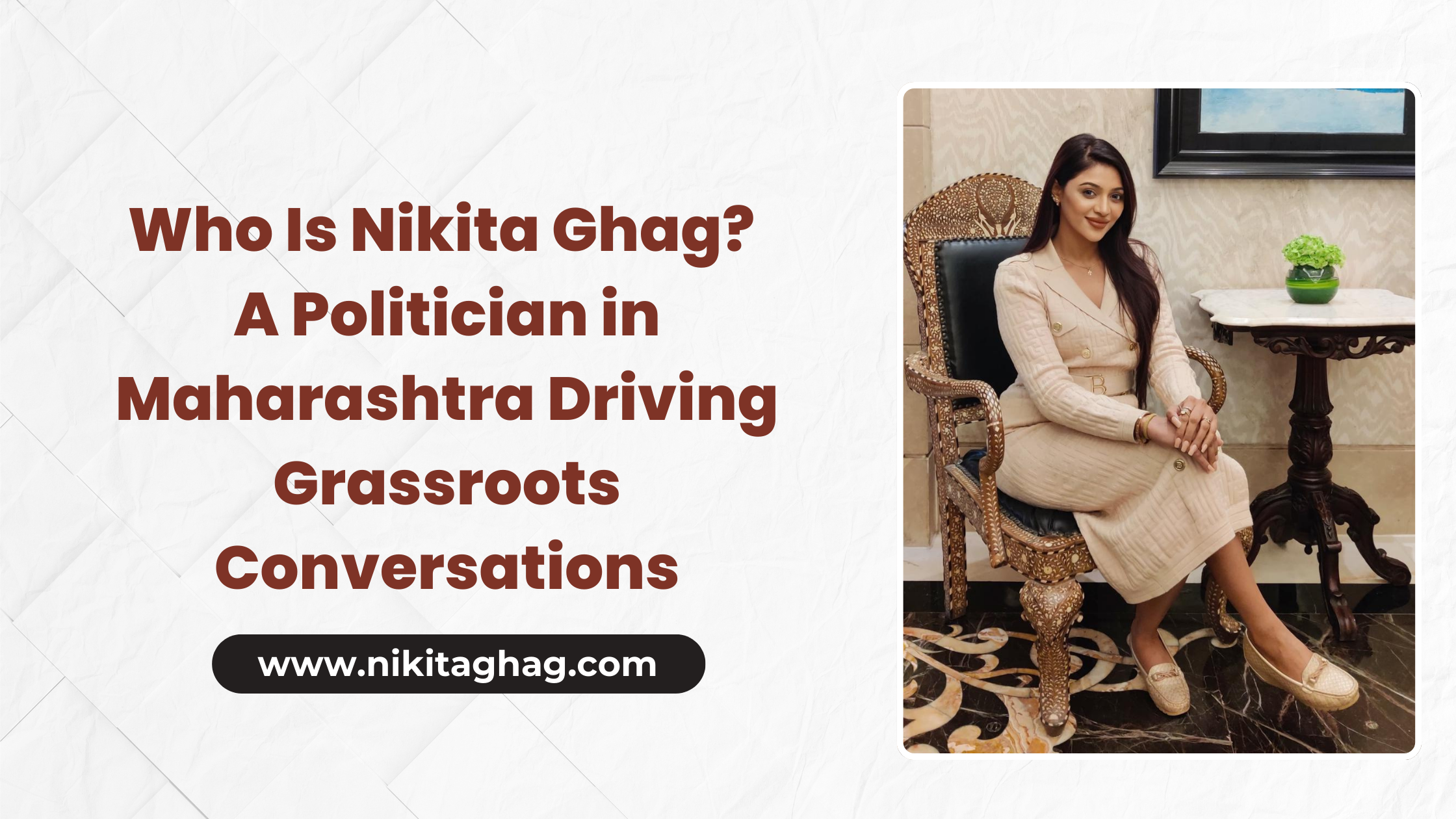
In a rapidly changing political landscape, leadership is no longer defined only by rallies, speeches, or party positions. It is increasingly shaped by how deeply leaders listen, engage, and respond to everyday citizens. One such emerging Nikita Ghag is gaining recognition as a politician in Maharashtra who is redefining political engagement through meaningful grassroots conversations, youth participation, women’s representation, and modern communication platforms like podcasts.
This pillar blog explores her role within Grassroots Maharashtra politics, the importance of grassroots dialogue, and how citizen-centric leadership is becoming the foundation of sustainable political change.
The Role of a Politician in Maharashtra Today
Being a politician in Maharashtra today comes with immense responsibility. As one of India’s most diverse and politically aware states, Maharashtra represents a blend of urban aspirations and rural realities. From Mumbai’s metropolitan challenges to grassroots issues in towns and villages, political leadership Maharashtra demands empathy, adaptability, and constant engagement.
A modern Maharashtra political leader is expected to:
- Understand local socio-economic challenges
- Stay accessible to citizens beyond election cycles
- Engage with youth, women, and first-time voters
- Communicate transparently across digital and offline platforms
Traditional top-down leadership is slowly being replaced by dialogue-driven politics. Leaders who actively listen and incorporate citizen feedback are building stronger trust and long-term credibility.
Why Grassroots Conversations Matter in Maharashtra Politics
At the heart of impactful governance lies grassroots politics Maharashtra. Policies created without ground-level understanding often fail to deliver meaningful change. Grassroots conversations help bridge the gap between leadership intent and public reality.
What Are Grassroots Conversations?
Grassroots conversations are direct, two-way interactions between political leaders and citizens. These include:
- Local meetings and informal discussions
- Community forums and listening sessions
- Digital conversations through social platforms
- Podcasts and long-form dialogue formats
Such conversations enable leaders to understand real issues like education access, healthcare gaps, employment challenges, women’s safety, and local infrastructure needs.
Impact on Governance
When leaders actively engage at the grassroots level:
- Policies become more inclusive and practical
- Marginalized voices are heard and represented
- Political trust increases among citizens
- Governance shifts from promises to performance
For a young politician in Maharashtra, grassroots engagement is not optional—it is foundational.
Youth Participation and the Rise of Young Politicians in Maharashtra
Maharashtra has one of the most politically conscious youth populations in India. With access to information, social media, and global perspectives, young citizens demand transparency, accountability, and relevance.
A young politician in Maharashtra resonates with this demographic by:
- Speaking in relatable, real-world language
- Addressing issues like career uncertainty, skill development, and mental health
- Encouraging civic participation beyond voting
- Creating safe spaces for discussion and dissent
Youth engagement strengthens democracy by transforming passive observers into active contributors. It also ensures that future policies are aligned with long-term aspirations rather than short-term optics.
Women in Political Leadership in Maharashtra
Women’s participation in politics is not just about representation—it is about perspective. Maharashtra has witnessed a growing presence of women leaders who bring empathy, resilience, and inclusive thinking into political leadership.
Women leaders often focus on:
- Education and skill development
- Healthcare and family welfare
- Safety and dignity in public spaces
- Economic independence for women
By encouraging women to engage in political conversations, leaders contribute to balanced governance. When women participate actively, policy discussions become more grounded in everyday realities.
Podcasts as Tools for Political Awareness and Grassroots Engagement
One of the most effective modern tools for political communication is the podcast. Unlike short-form content, podcasts allow in-depth conversations without interruption or sensationalism.
Grassroots Politics Maharashtra Podcast Episodes
Podcasts centered on grassroots politics Maharashtra → Podcast episode themes help:
- Explain policies in simple language
- Share real citizen stories and lived experiences
- Encourage open discussions on sensitive topics
- Educate first-time voters and young audiences
For Maharashtra politics, podcasts serve as digital town halls—accessible, transparent, and conversational.
Why Podcasts Work in Politics
- They build authenticity and trust
- They encourage long-form thinking
- They reach urban and semi-urban audiences
- They humanize political leadership
Through consistent podcast engagement, leaders can move beyond slogans and connect with citizens at a deeper intellectual and emotional level.
Citizen-Centric Governance: A Vision for Maharashtra
Citizen-centric governance places people at the center of policy-making. It is based on listening first and acting second.
Core Principles of Citizen-Centric Leadership
- Accessibility: Leaders remain approachable
- Accountability: Clear communication of decisions and outcomes
- Participation: Citizens are encouraged to contribute ideas
- Transparency: Processes and intentions are openly shared
For Maharashtra, this model ensures that governance adapts to changing social, economic, and cultural realities.
The Future of Political Leadership in Maharashtra
The future of political leadership Maharashtra lies in:
- Strong grassroots connections
- Active youth and women participation
- Technology-driven communication
- Ethical, transparent governance
Leaders who prioritize conversations over campaigns and engagement over appearances are shaping a more inclusive political ecosystem.
Conclusion: A New-Age Politician in Maharashtra
Nikita Ghag represents a new generation of political leadership—one that values listening as much as leading. By focusing on grassroots conversations, youth and women engagement, and innovative platforms like podcasts, she reflects the evolving expectations of citizens in Maharashtra.
As Maharashtra politics continues to transform, leaders who remain grounded, accessible, and citizen-focused will define the state’s democratic future.
If you’re interested in understanding how grassroots dialogue, modern communication, and inclusive leadership are reshaping Maharashtra’s political landscape, this is a movement worth following closely.